Honey bees vs. yellow jackets: how to tell them apart
Half the "bee problems" we get called about aren't bees at all. It matters, because the answer changes everything: honey bees get relocated alive, yellow jackets get treated by a licensed applicator. Here's how to tell who you're actually dealing with.
The 10-second visual check
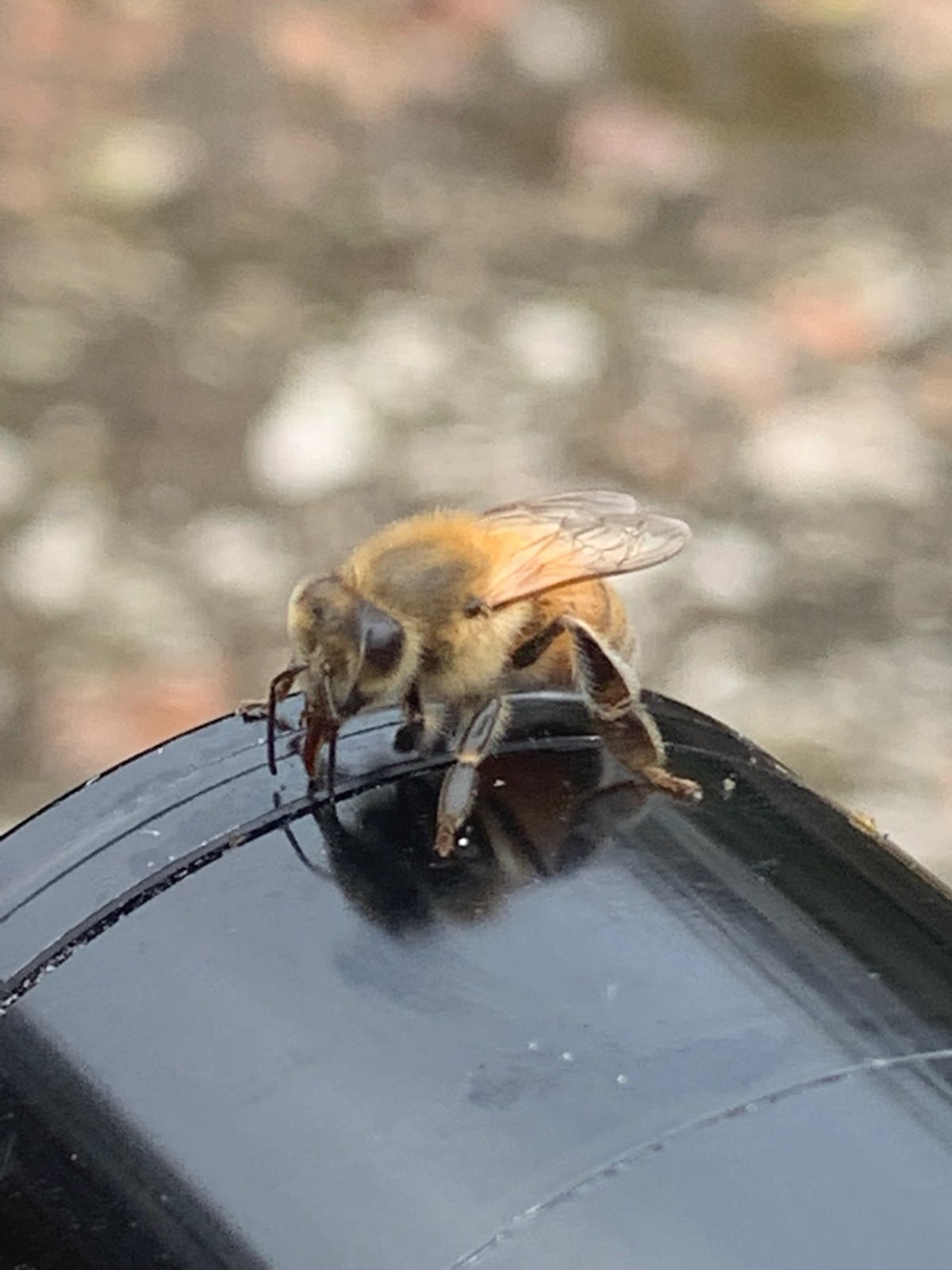
- Honey bees are fuzzy. They look like they're wearing a tiny wool sweater — amber-brown to nearly black, muted colors, hairy body. That fuzz is for carrying pollen.
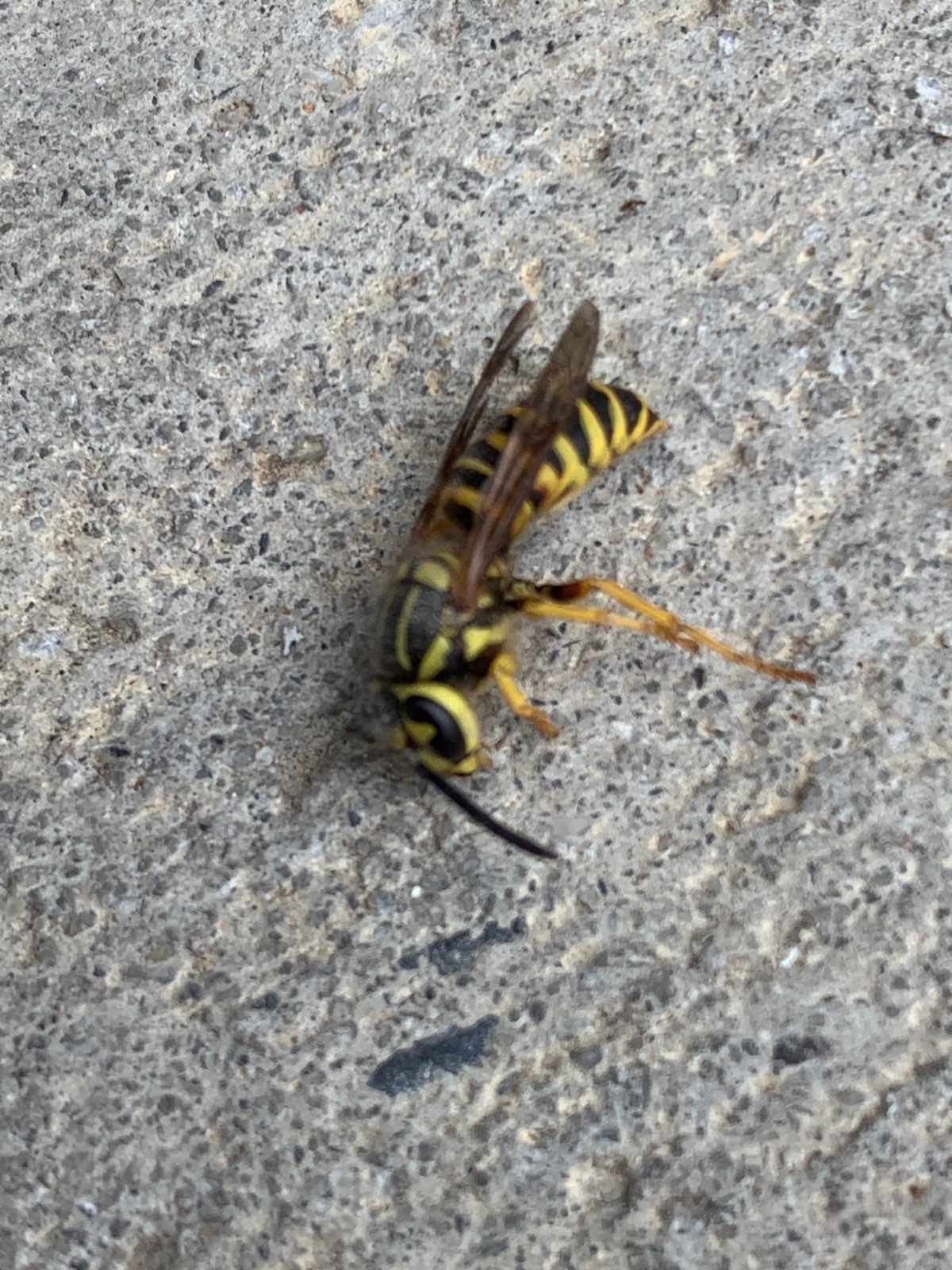
- Yellow jackets are shiny. Smooth, hairless, and glossy, with sharp bright-yellow-and-black bands that look painted on. They look "cleaner" and meaner — because they are.
- Flight posture: honey bees fly heavy and deliberate, often with visible pollen baskets on their legs. Yellow jackets fly fast, agile, and low, with a rapid side-to-side hunting pattern.
What they're doing gives them away
Behavior is honestly the easier tell:
- On flowers, ignoring your sandwich? Honey bee. They collect nectar and pollen and have zero interest in your lunch.
- Circling your soda can, landing on burgers, raiding the trash? Yellow jacket. They're scavengers — meat and sugar. Every late-summer picnic pest in Pennsylvania is a yellow jacket, not a bee.
- A basketball-sized cluster hanging from a branch in May? Honey bee swarm — docile, temporary, and we collect them free.
- Angry traffic pouring out of a hole in the ground or a gap in the porch when you mow? Yellow jackets. Honey bees almost never nest in the ground.
The nest tells the whole story
Honey bees build wax. Vertical sheets of golden hexagonal comb, usually inside a protected cavity — a hollow tree, a wall void, a chimney. A colony in your wall stores real honey, which is exactly why removal is a job for a beekeeper (comb and honey left behind cause bigger problems later).
Yellow jackets build paper. Gray, papery material chewed from wood fibers — either a covered football-shaped nest, layered combs inside a wall void, or most commonly a nest underground. No wax, no honey, and the whole colony dies off at first hard frost anyway. Only the new queens survive winter.
Timing matters in Central PA
Honey bee swarms peak late April through June — that's when you'll see clusters on branches and scout bees checking out soffits. Yellow jacket colonies start tiny in spring and build all summer, which is why they explode into a problem in August and September, right when their natural food declines and they get pushy about yours.
Why the ID changes who you call
This is the part that matters:
- Honey bees: we relocate them alive — swarm collection is free, and structural removals save the colony, the comb, and your house from a wall full of abandoned honey. Never spray a honey bee colony; a poisoned colony with 40 pounds of honey in your wall becomes a rot, ant, and mouse problem.
- Yellow jackets, hornets, and wasps: those are a pest-control job, handled by our sister company Lawns Plants & Pests — same family, licensed PA applicator, and they know when something is actually a honey bee and send it back to us.
Either way, one phone number sorts it out: 717-379-3248. Text us a photo if you're not sure — we ID stinging insects from pictures every week, and it's a lot easier than getting close enough to count body hairs.
Not sure what you've got?
Text a photo to 717-379-3248 and we'll tell you — bee, wasp, or hornet — and what to do next.
Call or Text 717-379-3248