Honey bee pollination services & pollinator restoration
The Alleman Apiary places honey bee colonies on farms, orchards, and growing operations throughout Central Pennsylvania for seasonal pollination — apples, peaches, blueberries, cherries, squash, pumpkins, and other crops where managed pollination significantly improves yield. Through our sister business Lawns Plants & Pests LLC, we also handle pollinator habitat restoration. We're the only Central PA operation that does both. Limited pollination contracts each season — call or text 717-379-3248.
Pollination isn't just about renting hives during bloom
The bees that visit your crops need foraging habitat, water, and minimal pesticide exposure for the months they aren't actively working your bloom. Most pollination contractors place hives and walk away. We work both sides — placing strong hives during bloom, and helping you make your property a place where pollinators can actually thrive year-round.
The two services connect but are separate offerings:
- Bee placement (this page, through The Alleman Apiary) — honey bee colonies placed for seasonal pollination
- Pollinator habitat restoration (through Lawns Plants & Pests LLC) — property-level changes that support pollinators
You can use either service alone. Or both, which is where the real impact is.
What we provide
Bloom-window hive placement
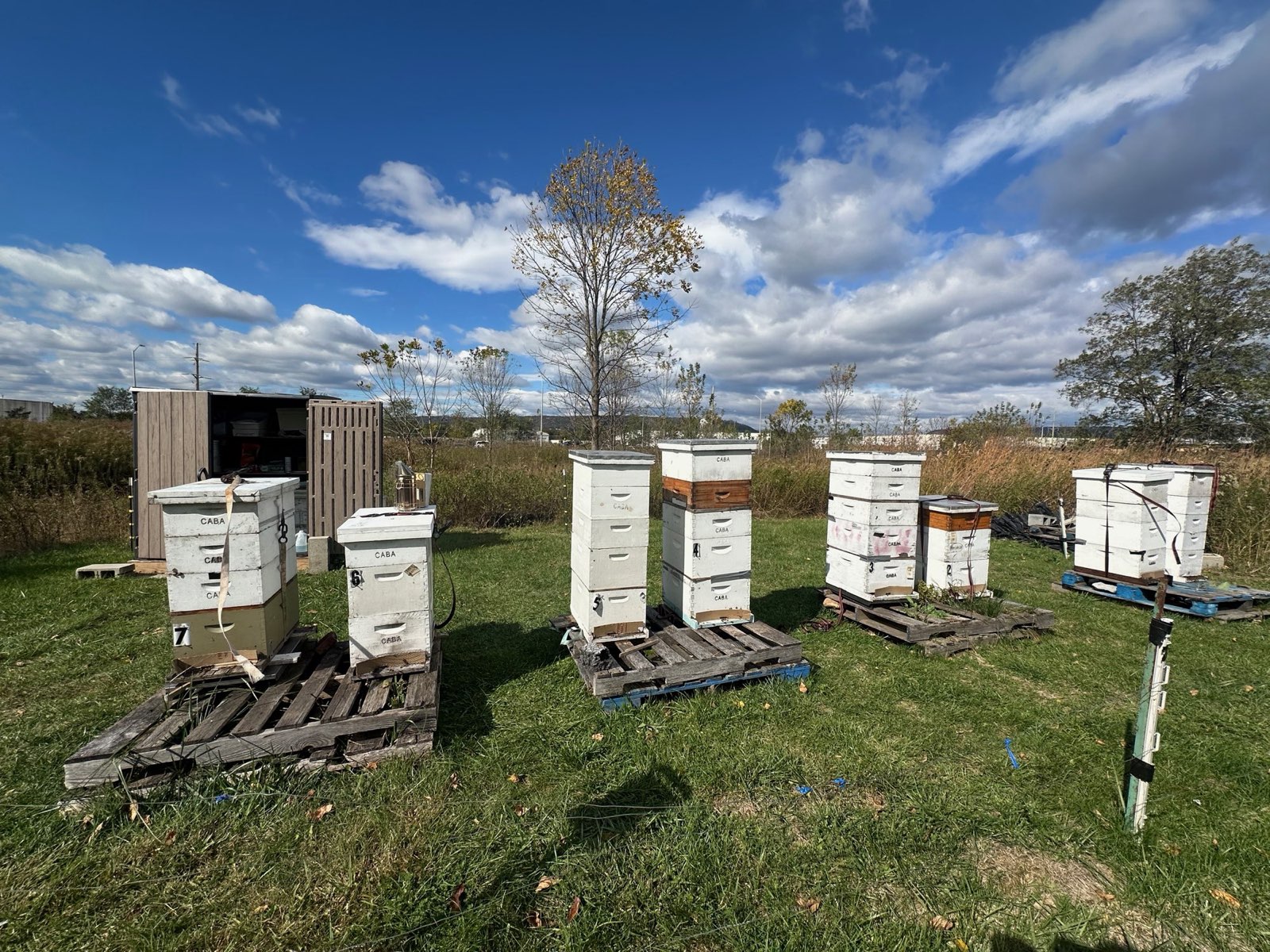
We place strong, healthy honey bee colonies at your operation during your specific bloom window. Number of hives depends on acreage, crop, and density of plantings. After bloom, we collect the hives and return them to our apiaries.
Multi-bloom coverage
For operations with multiple pollinator-dependent crops at different bloom windows (early-season fruit followed by late-season vegetables), we work out coverage across the season — sometimes including a hive rotation if bloom periods don't overlap.
Year-round hive residency
For larger or more diverse operations, we can sometimes arrange year-round placement — bees stay on your property continuously, providing pollination for whatever's blooming and giving you a working apiary as part of your land. A different arrangement than seasonal placement; worked out case by case.
Crops we pollinate
In Central PA, common pollination contracts include:
- Apples and pears — early-spring bloom, critical for fruit set
- Cherries (sweet and sour) — short bloom window, very pollinator-dependent
- Peaches and plums — partially self-pollinating but yield improves significantly with managed bee presence
- Blueberries — high pollinator demand, multiple varieties bloom together
- Pumpkins, squash, melons, cucumbers — late-season cucurbit pollination
- Strawberries — both June-bearing and day-neutral varieties benefit from bee presence
- Buckwheat, sunflowers, and pollinator cover crops — increasingly common as growers add pollinator habitat
If your crop isn't on this list, ask anyway. We can talk through whether managed pollination makes sense for your operation.
How it works
- Initial conversation. Call or text 717-379-3248 with what you grow, your location, and your typical bloom window. Most decisions can be made with a phone call and a Google Maps look at your property.
- Site assessment if needed. For some operations we visit before signing anything to see access, hive placement options, terrain, and any pesticide considerations on your land or neighboring properties.
- Quote and contract. Pricing depends on number of hives, distance from our base, length of placement, and complexity. We provide a written quote up front.
- Hive placement. We deliver hives at the right time relative to your bloom — typically a week before bloom starts, so the bees orient and start working before flowers open.
- Mid-bloom check (when needed). For longer or more complex contracts, we check on hives during bloom to make sure they're strong and active.
- Collection after bloom. We pick up the hives when bloom is finished, returning them to our apiaries.
Pollinator habitat restoration
Through our sister business Lawns Plants & Pests LLC, we offer pollinator-focused property work that's harder to find from a typical lawn or pest service:
- Pollinator-friendly lawn programs — fully organic options, treatments timed before or after bloom, mosquito systems like In2Care that don't broadcast-kill insects
- Native plant establishment guidance — what to plant, where, and when for the best pollinator value
- Pollinator strip installation — wildflower buffers along orchard edges, fence lines, and unused field margins
- Pesticide audit and modification — review of current pesticide practices to identify pollinator-harming applications and recommend alternatives
- Spot treatment vs broadcast spraying — targeted approaches that preserve non-target insects
These are services no chain pest control company offers, because they don't have the pollinator knowledge to do them right. We do them because we live with bees every day. See Pollinator Restoration through LPP for details.
How we price
Pollination contracts are quoted case by case. Typical factors that affect pricing:
- Number of hives
- Distance from our apiaries (delivery and collection logistics)
- Length of placement (short bloom vs extended residency)
- Crop-specific requirements
- Access conditions (some sites are more involved to deliver to)
For reference, industry-standard pollination pricing in the eastern U.S. typically runs $100–$200 per hive per bloom for short-window contracts, with adjustments up or down based on the factors above. We aim to be priced fairly for the local market — not the cheapest, not the most expensive.
Call or text 717-379-3248 with what you grow and where, and we'll walk through your specific situation.
Where we place hives
We place hives for pollination contracts throughout Central PA — Dauphin, Cumberland, Lebanon, Perry, Juniata, York, Lancaster, and surrounding counties. For operations farther afield, ask anyway — sometimes the math works for travel.
Pollination FAQ
How early should I book?
For spring bloom (apples, cherries, peaches), book by January or February — earlier is better. Spring contracts are first-come, first-served and we have limited availability. Late-season crops (cucurbits, buckwheat) have more flexibility but earlier conversations are still better.
How many hives do I need?
Standard recommendations vary by crop. Apples and cherries: roughly 1 strong hive per acre. Blueberries: 2–3 hives per acre depending on variety density. Pumpkins and squash: 1 hive per acre is usually enough. We work out actual numbers based on your specific operation, not a generic formula.
What about pesticide use on my farm?
We need to know about your spray schedule before placing hives. Bees forage 2–3 miles from the hive, so neighboring property pesticide use also matters. For operations using foliar insecticides during bloom, we may not be a fit — bee health is non-negotiable for us. We'll talk through this honestly during the initial conversation, and if it doesn't work, we'll say so.
Can I learn beekeeping while you have hives on my property?
Yes — that's actually a good way to start. Several of our pollination clients have begun keeping their own bees after a season of having our hives onsite. We offer beekeeping mentorship and can structure mentorship around the hives we already have at your location.
Can I do habitat restoration without bee placement?
Yes. The two services are independent — you can do pollinator habitat work through LPP without booking hive placement, or you can book hive placement without changing your property. They just work better together.
Do you do large-scale commercial pollination?
No. We're a small Central PA apiary — we handle a limited number of contracts each season. For very large operations needing dozens or hundreds of hives, you'll want a regional or migratory beekeeper. We can sometimes refer you to one if asked.
Talk to us about your operation
Limited contracts each season — early conversations are better than late ones.
Call or Text 717-379-3248