Hive rental for small orchards & vegetable growers
A few hives placed during bloom can take a backyard orchard from "decorative" to "actually fruiting." Here's how short-term pollination works for small Central PA growers.
What pollination service actually does for you
Most fruit trees, berries, and many vegetables need insect pollination to set fruit. In good years, wild native bees and feral honey bees do most of the work for you. In recent years — with neonicotinoid-treated landscapes, habitat loss, and Asian tiger mosquito spraying knocking down native pollinators — that background population is much lower than it used to be.
The result: properties that used to produce heavy crops on autopilot are setting half the fruit they used to. Renting a few hives during bloom puts that gap back.
Who benefits most
- Small backyard orchards. 5–30 fruit trees — apples, pears, plums, cherries. One or two hives at bloom usually doubles fruit set.
- Cucurbit growers. Squash, pumpkin, cucumber, melons all require multiple bee visits per flower to set fruit. Often the highest-impact crop for added hives.
- Berry patches. Blueberries especially benefit — their flowers require buzz pollination that honey bees handle well in numbers.
- CSA and market growers. When you're counting on yield to fill shares or hit market quantities, you can't leave pollination to chance.
- Sunflower & ornamental seed plots. Seed crops need full pollination to set seed worth harvesting.
How it works at our scale
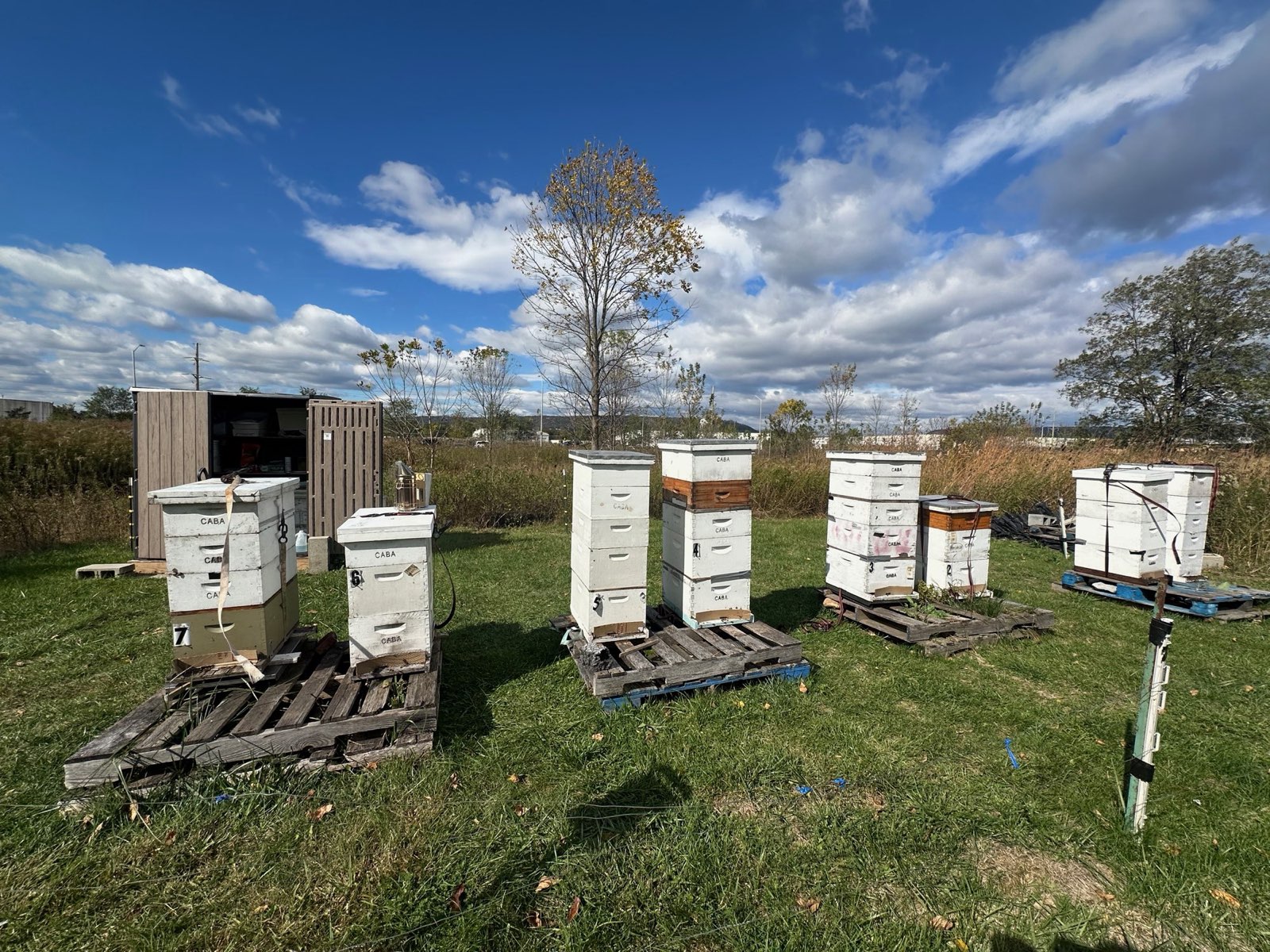
We're not a commercial pollination operation moving 5,000 hives to almond fields. We're a small Central PA apiary that places a limited number of hives with local growers during bloom. The fit is for properties that need 1–6 hives, not 600.
A typical season looks like:
- Talk in winter. Email or call us by February with your crop, acreage, and approximate bloom dates. We commit hives based on what's available.
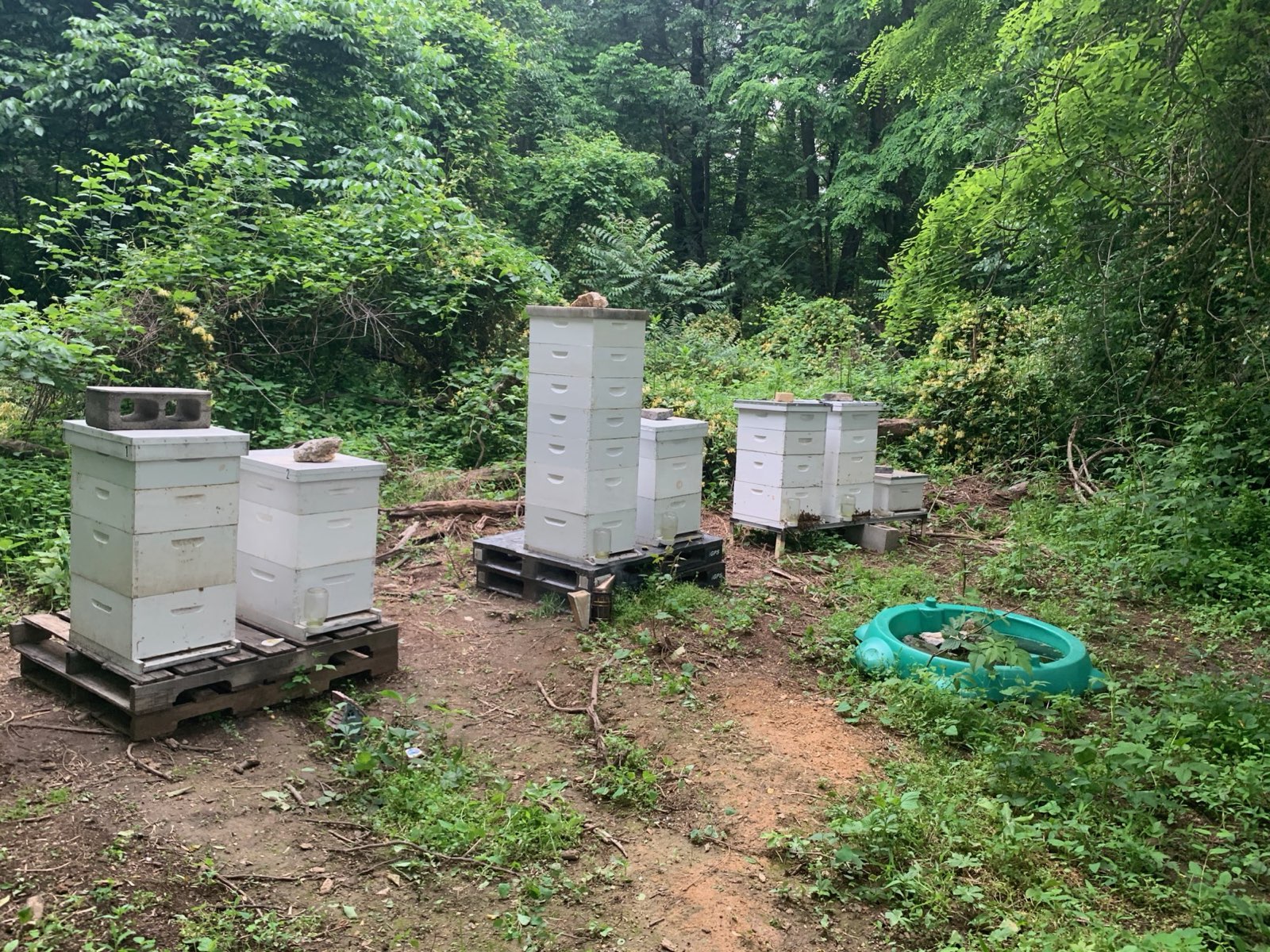
- Delivery near first bloom. We bring the hives in the evening and place them at the edge of the planting in a sunny spot away from foot traffic.
- Bees work the bloom. Hives stay for the duration of bloom — usually 2–4 weeks for tree fruit, longer for sequential crops.
- Pickup. Once bloom is over (or your spray schedule resumes), we collect the hives in the evening.
What "good placement" looks like
- Sunny morning exposure (south-facing is ideal)
- Protected from afternoon wind
- 20–50 feet back from the crop — bees don't need to be inside it
- Away from high-traffic areas (driveways, paths kids use)
- Reasonable vehicle access for delivery and pickup
- Water source within 200 yards (a small pond, creek, or even a homeowner's bird bath works)
What we charge
Pricing depends on the number of hives, the distance, and the bloom duration. Send us a description of your crop and acreage and we'll give a flat quote. For small growers (under an acre) the cost is usually less than you think — and far less than a season of bad fruit set.
Long-term: keep your own bees instead
For some growers the better answer isn't a rental contract every spring — it's their own hives, on-property year-round. We offer beginner mentorship for exactly this situation: someone with land and a real reason to want bees, learning to manage one or two hives without becoming a full-time beekeeper. Apiary services & mentorship →
Need bees for bloom?
Talk to us by February for spring placement — available hives go fast.
Call or Text 717-379-3248