When is honey bee swarm season in Central PA?
If you've found a cluster of bees on a branch in May, you're looking at one of the most natural and least dangerous events in beekeeping — and we'd love to come collect it.
The Central PA swarm window
In the Harrisburg area, honey bee swarming peaks from late April through June, with most activity in May. A second, smaller wave of swarms can show up in late summer (August), but it's rare and usually less successful for the bees.
The timing is driven by the colony, not the weather directly. As the parent colony grows through spring and the nectar flow ramps up, the existing queen leaves with roughly half the workers to find a new home. A virgin daughter queen stays behind to take over the original hive. Both colonies survive — this is how honey bees reproduce at the colony level.
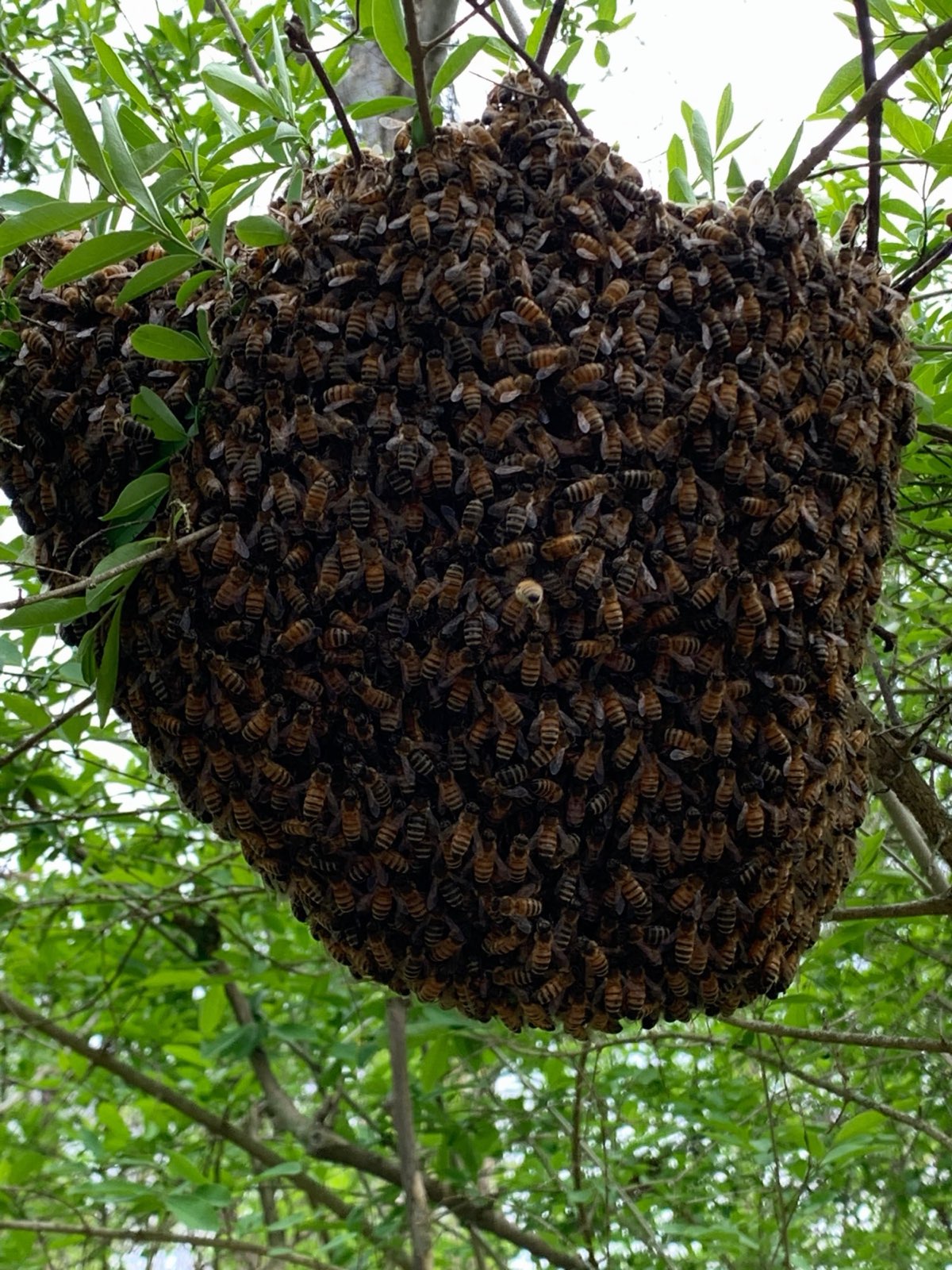
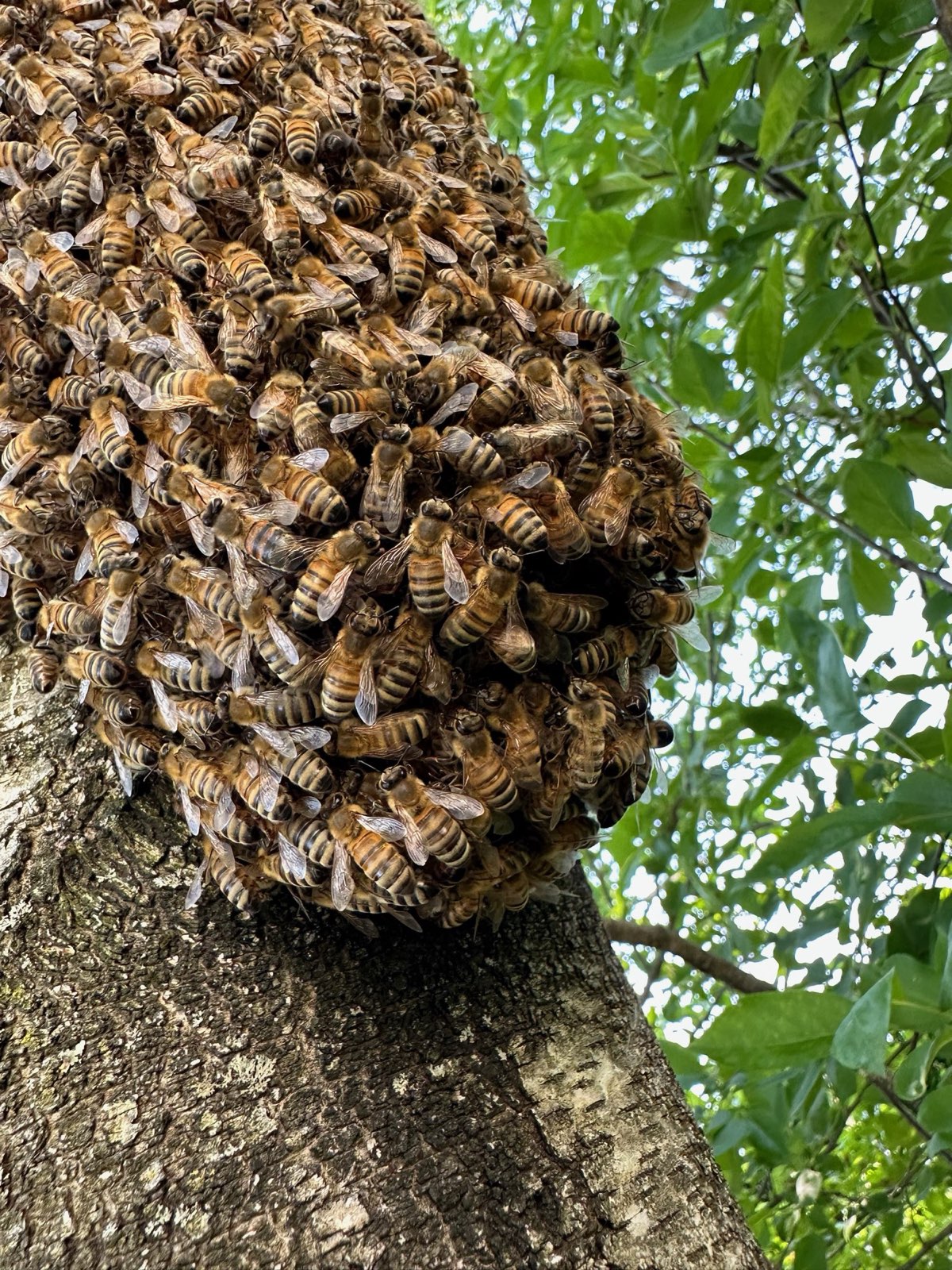
What a swarm looks like
A typical swarm is a fist-to-basketball-sized cluster of bees hanging from a tree branch, fence post, mailbox, or porch column. The cluster is calm. The bees in it have no comb, no brood, and no honey to defend — their stomachs are full of food they brought along for the move. Stings during swarm collection are very rare.
What you usually won't see during swarm season:
- An angry buzzing nest in the ground — that's yellow jackets
- A grey papery football hanging from a tree — bald-faced hornets
- Bees flying steadily in and out of a hole in your soffit or wall — that's an established colony, not a swarm, and needs licensed removal
Why do swarms happen on your property?
A swarm in your tree is opportunistic. Once the bees leave their parent hive, they cluster nearby for a few hours to a couple of days while scout bees search for a permanent home. They picked your branch because it was convenient — not because they want to move into your house.
The scouts are out evaluating cavities (tree hollows, soffit voids, electrical boxes) the whole time. If you can call us before they find one, we collect them gently into a box and they spend the rest of their lives in our apiary, making honey.
What to do if you find a swarm
- Don't spray. A swarm is the easiest, calmest stage of a honey bee colony. Insecticide kills them — and there's no need.
- Send a photo. Text 717-379-3248 with a picture and rough location. We can confirm honey bees vs wasps in seconds.
- Move quickly. Swarms often move on within 24–48 hours. The sooner you call, the more likely we can collect them.
- Keep people and pets away. Even though swarms rarely sting, don't disturb them with brooms, ladders, or hoses.
What if it's not actually a swarm?
If the bees are flying steadily in and out of a hole — in a wall, a soffit, an old tree, a chimney — that's an established colony with comb and honey, not a swarm. Removing an established colony involves opening the structure to extract the comb, and that crosses into licensed pesticide and construction territory.
Established colonies require opening the structure to extract comb, brood, and honey. You have two options, and we handle both under one roof: The Alleman Apiary can remove the colony alive using bee vacuums and careful comb extraction, then seal the entry — learn more about our live bee removal process — or, where live removal isn't practical, our sister company Lawns Plants & Pests handles removal and prevention as a licensed pesticide applicator. Call and we'll help you pick the right approach. Same phone number: 717-379-3248.
See a swarm? Don't wait.
Swarms move on within a day or two. Send us a photo and we'll confirm it's honey bees and come collect them.
Call or Text 717-379-3248