Swarm or established colony? How to tell.
A cluster of bees on a branch and a colony living in your wall are two completely different jobs. Same species, totally different fix.
What a swarm looks like
A swarm is a temporary cluster of honey bees with their queen, hanging from something outside — a branch, a fence post, a porch column, a mailbox. The cluster looks like a hanging fist-to-football of bees, calm, mostly motionless. There's no comb, no honey, no babies inside the cluster — just bees, food in their stomachs, and a queen.
Swarms are temporary. The bees are looking for a new home. They'll stay clustered for a few hours to a couple of days while scout bees explore the neighborhood, then leave together.
Who handles this: us. The Alleman Apiary collects swarms live and relocates them to our hives. Often free, depending on access. Swarm collection →
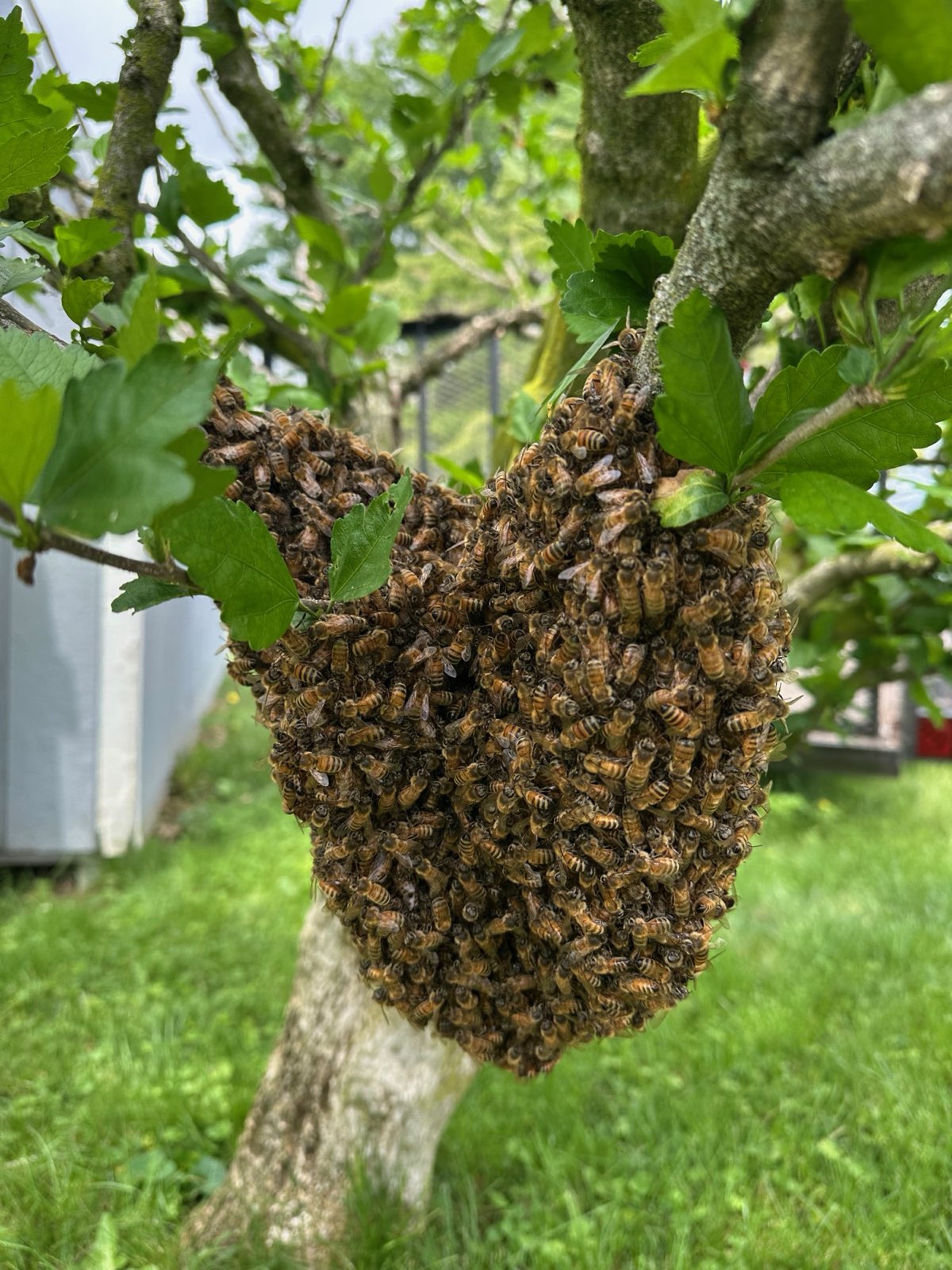
What an established colony looks like
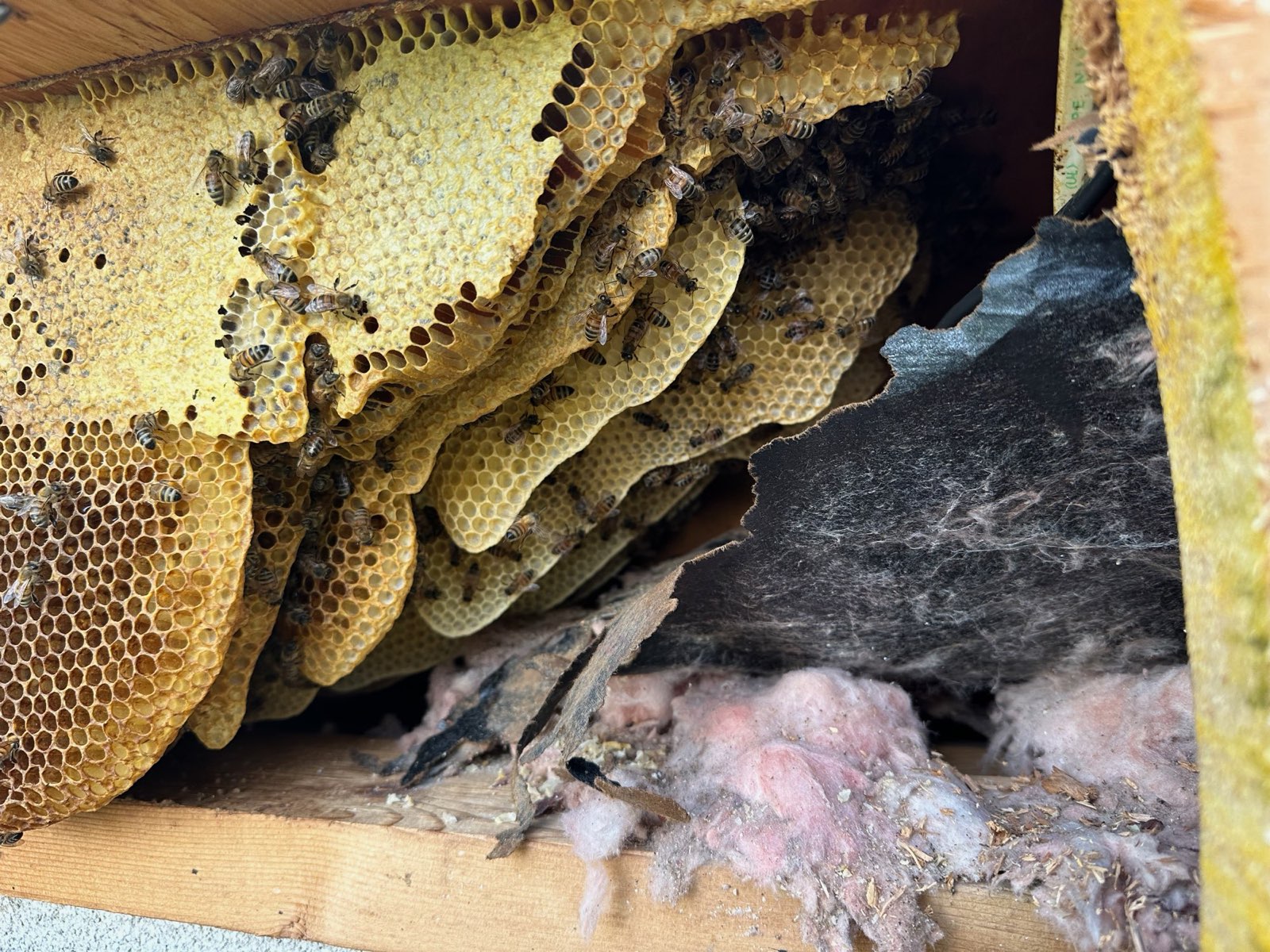
An established colony lives inside something — a wall void, a soffit, an old hollow tree, a chimney chase, an attic, a shed wall. You'll see bees flying steadily in and out of a single hole or seam, the same hole every day, for weeks or months. There's no visible cluster. The bees are inside, and inside they've built comb full of honey and brood.
Established colonies don't move on. They expand. A colony that's been in a wall for a year can have 60+ pounds of honey and tens of thousands of bees living between your siding and your drywall.
Who handles this: we do. Live honey bee removal from walls, soffits, and chimneys is part of our work — bees are vacuumed alive, comb saved when possible, entry points sealed. Live bee removal → Removing a structural colony usually involves opening the wall or soffit to extract the comb; otherwise the abandoned honey ferments, attracts other pests, and stains the structure for years.
Quick decision table
| What you see | It's... | Call |
|---|---|---|
| Cluster of bees on a tree branch | Swarm | Us |
| Cluster on a fence post or mailbox | Swarm | Us |
| Bees flying in/out of a wall hole | Established colony | Us |
| Bees in a chimney or attic | Established colony | Us |
| Buzzing in a ground hole | Probably yellow jackets | LPP |
| Grey papery football in a tree | Bald-faced hornets | LPP |
Not all flying-yellow-and-black is honey bees
Yellow jackets and bald-faced hornets are the biggest source of mistaken-identity calls during stinging-insect season. The fastest way to tell:
- Honey bees are golden-brown and fuzzy. Body is rounded. They die after they sting.
- Yellow jackets are bright yellow and black, shiny (not fuzzy), with a narrow waist. They can sting repeatedly. Often nesting in the ground or in walls.
- Bald-faced hornets are black and white. Big — up to 3/4 inch. Nests look like grey paper footballs hanging from trees or eaves.
Send a photo to 717-379-3248 if you're not sure — we can tell from a phone picture in seconds and route the call to whichever side of the family handles it.
Why this matters
The biggest mistake homeowners make is treating an established wall colony like a swarm — or treating a swarm like a pest problem. Spraying a swarm is unnecessary and wasteful (they were going to leave anyway). Trying to "wait out" an established wall colony lets the honey stores grow until removal becomes a much bigger job.
Same phone number for both. We'll figure out which it is and either come collect them or route to the licensed crew.
Got bees somewhere unexpected?
Send a photo — we'll tell you what you're dealing with and who handles it.
Call or Text 717-379-3248