What's actually inside a nucleus colony?
A nuc is the running start of a beehive. Here's what it contains, why it beats package bees in Pennsylvania, and what to expect after you install it.
The short version
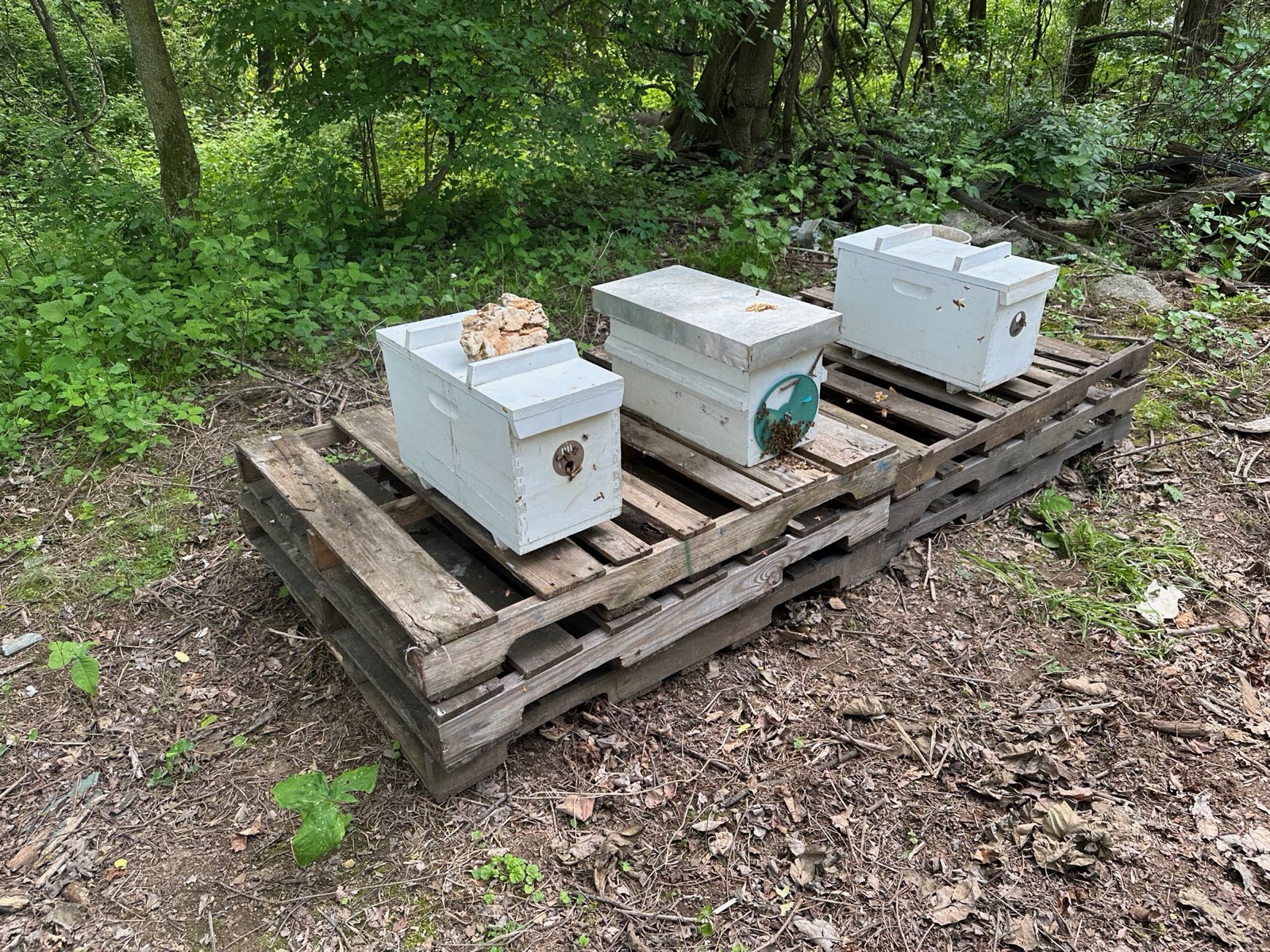
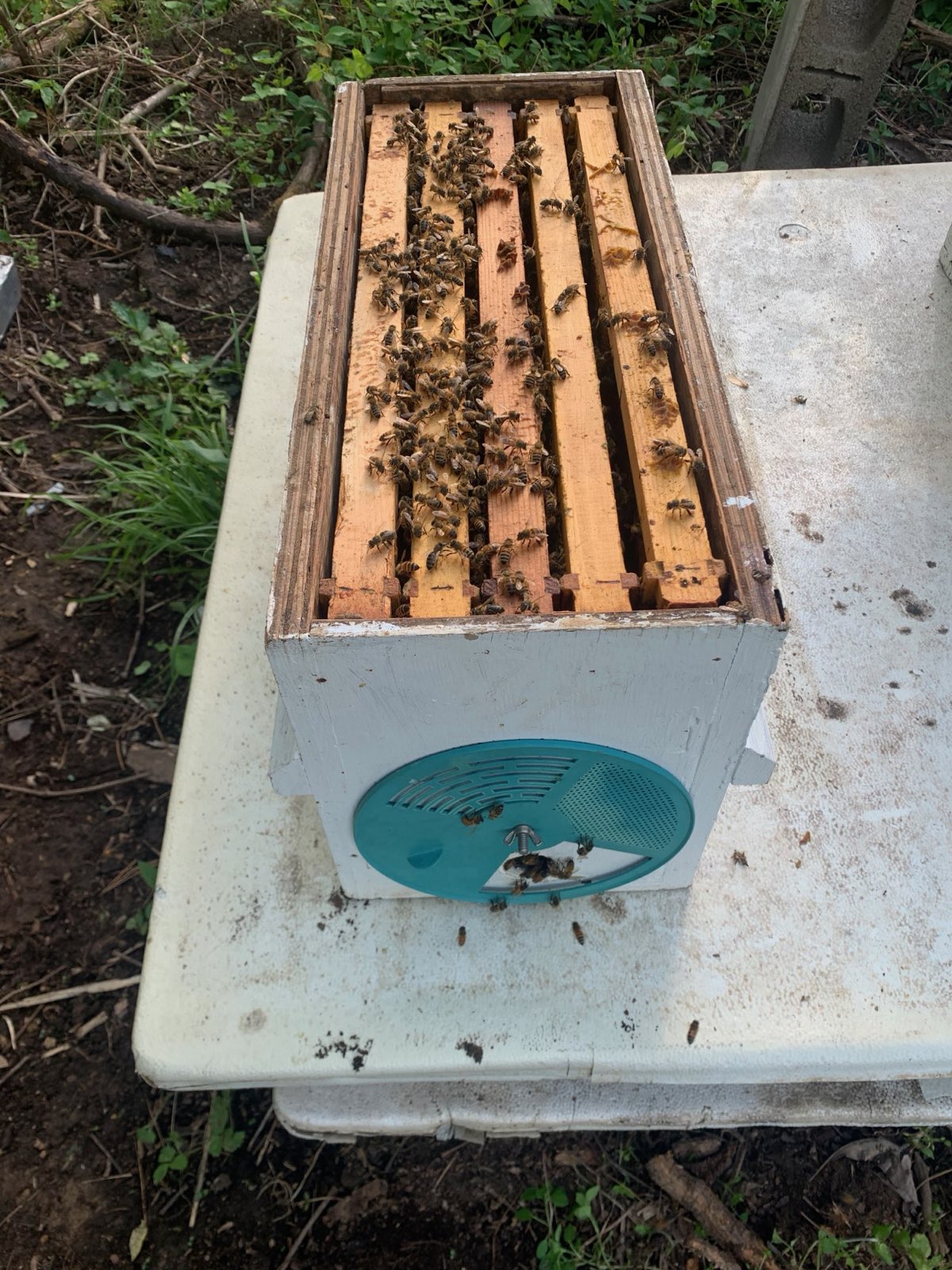
A nucleus colony — "nuc" for short — is a small, already-functioning honey bee colony. Typically five frames of bees, brood, honey, and pollen, all built around a mated, laying queen. You install the frames into your full-size hive box and the colony picks up right where it left off.
What you're actually getting on those 5 frames
- A laying queen. Mated, already accepted by the colony, already producing eggs. This is the most valuable single thing in the box.
- Brood at every stage. Eggs, larvae, capped pupae. New worker bees will be emerging within days of installation.
- Adult worker bees. Roughly 8,000–12,000 bees in a 5-frame nuc — foragers, nurses, guards, the full age structure of a functioning colony.
- Drawn comb. The wax cells the queen lays in and workers store nectar in. Already pulled out and ready to use — an enormous head start.
- Stored honey and pollen. Food the colony brought along. Enough to keep them going for weeks while they get oriented to your yard.
Why a nuc beats package bees in PA
Package bees are 3 pounds of loose bees plus a caged queen, dumped into a fresh box of empty foundation. They have to draw comb, accept the queen, start laying, and store food from zero. That works fine in warmer climates with long flow seasons. In Central PA it puts the colony way behind — many package starts don't make it through their first winter.
A nuc skips all of that. Day one, you have a queen already laying, comb already drawn, food already stored, and a worker force big enough to defend itself and forage hard. By July a healthy installed nuc is indistinguishable from any other established colony in your yard.
How to install a nuc
- Place your full-size hive box in the spot it'll live, on a level stand, before pickup day.
- Pick up the nuc in the evening if possible, when foragers are home. Or right at dusk.
- Park the closed nuc box in the location it'll occupy. Open the entrance and leave it overnight so foragers can orient in the morning.
- The next evening, open the nuc, transfer the 5 frames in the same order they're in, into the center of your full-size box. Fill the rest with empty frames.
- Feed sugar syrup (1:1 ratio) for the first 2–3 weeks — helps them draw out the new frames.
- Leave them alone for a week after that. Resist the urge to open them. They'll work better undisturbed.
What to expect in the first season
If you install a nuc in early May in Central PA, by mid-June the colony should fill out most of a 10-frame deep. By late June or July they'll need a second deep added. By August the colony should be approaching full size and may produce a small honey surplus you can harvest.
What to watch for the first season:
- Mite load by late summer. Varroa is the single biggest cause of overwinter loss in PA. Mite testing in August is non-negotiable.
- Winter food stores. A first-year colony needs 60–80 pounds of honey going into winter in Central PA. If they don't have it, feed in fall.
- Strong cluster going into November. If the colony is small in late October, it's at high risk of winter loss.
About our nucs
Our nucleus colonies are built in-yard from our own established hives, headed by Pennsylvania-bred queens raised from our climate-adapted stock. Available in limited numbers each spring — usually pickup mid-May depending on the season. Reserve early; nucs sell out by April most years.
Starting a hive this year?
Call or text and we'll talk through what you need — nuc, queen, or just first-year mentorship.
Call or Text 717-379-3248