Why does my raw honey crystallize?
If your jar of honey turned thick and cloudy on the shelf, don't toss it. Crystallized honey is one of the most reliable signs you've got the real thing.
What crystallization actually is
Honey is a super-saturated sugar solution — it holds far more sugar in liquid form than physics really wants it to. Over time, the sugar (mostly glucose) drops out of solution and forms small crystals. The result is a thicker, paler, sometimes grainy honey. The flavor is unchanged. The honey is unchanged. It's just rearranged itself.
Pasteurized supermarket honey resists crystallization because it's been heated to dissolve all the existing micro-crystals and filtered down to nothing — no pollen, no wax, no rough edges for new crystals to form on. It also costs the honey most of its character.
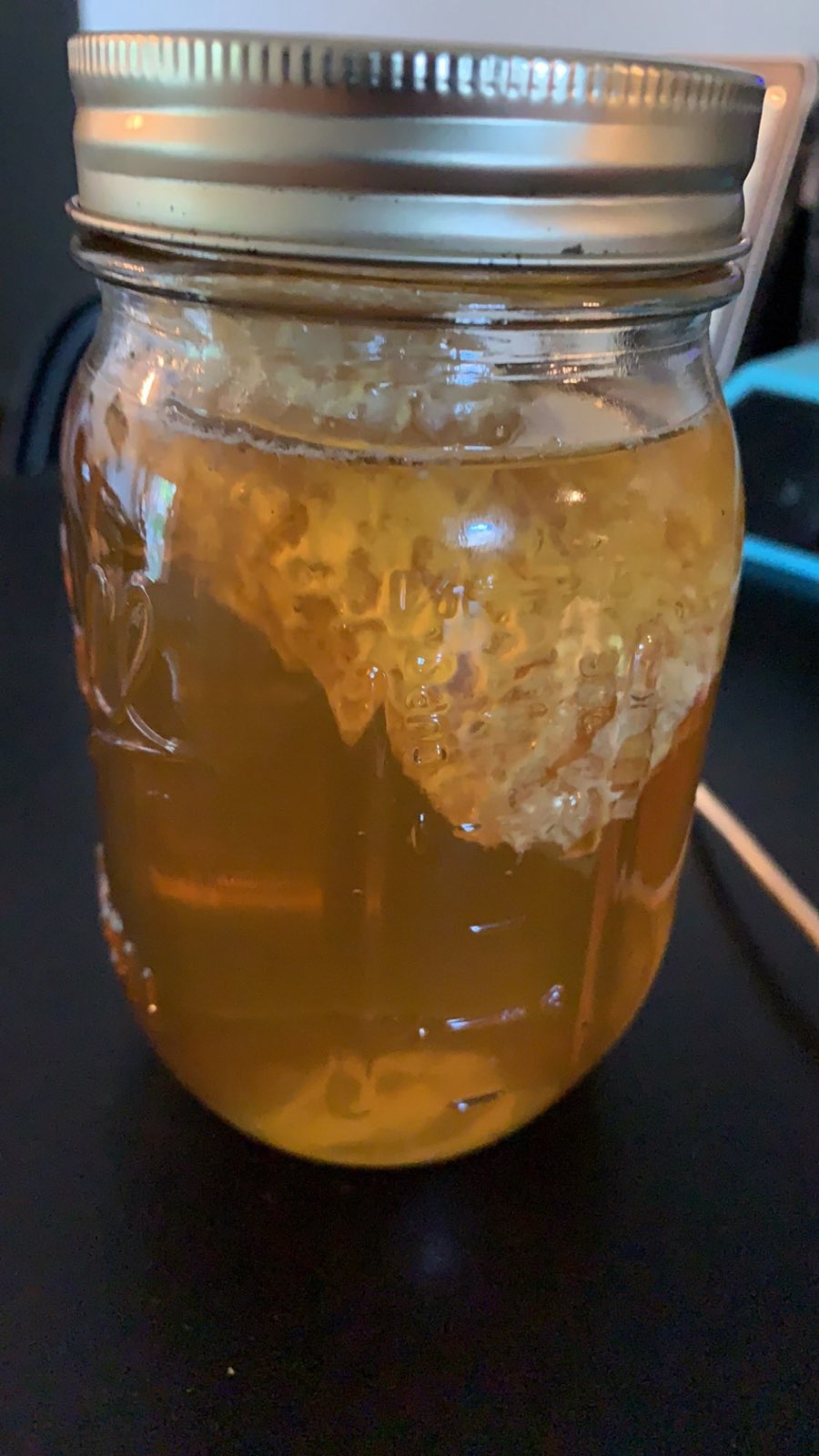
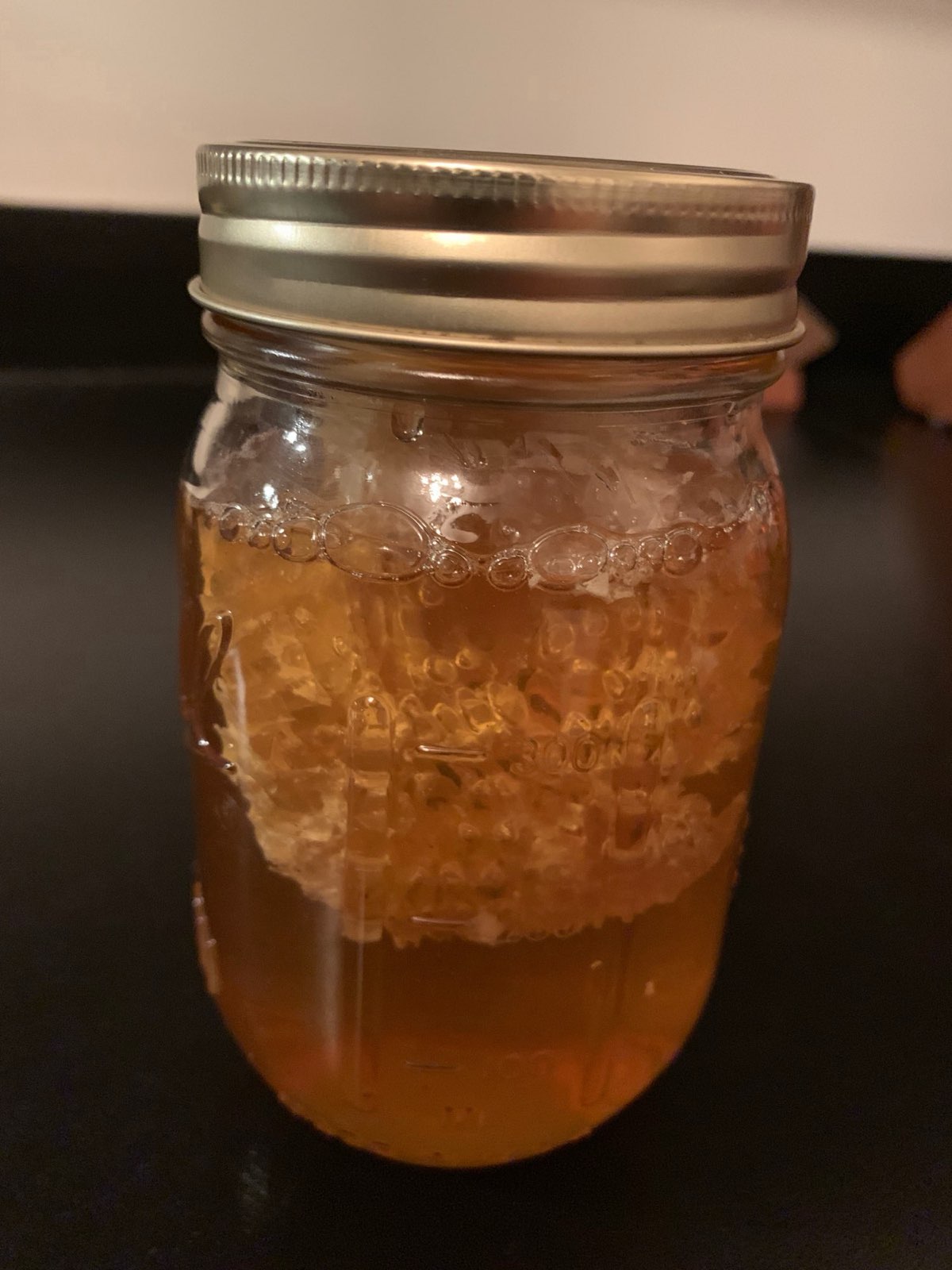
Why raw honey crystallizes faster
Raw honey carries the pollen, wax flakes, and propolis bits that come with it from the hive — the things that define raw honey. Those particles act as seeds for crystal formation, which is why a jar of raw honey can go from clear to crystallized in weeks while a bottle of bear-shaped supermarket honey stays liquid for years.
Some honey crystallizes within days of harvest. Some takes months. It depends on:
- Floral source. Honey high in glucose (clover, dandelion, goldenrod) crystallizes fast. Honey high in fructose (tupelo, sage, much of the late-summer Central PA crop) stays liquid longer.
- Temperature. Cool kitchen pantries (50–57°F) are the sweet spot for crystal formation. Warmer or much colder slows it down.
- How much pollen and wax is in it. The more raw, the faster.
Is crystallized honey bad?
No. Honey doesn't spoil. Properly stored, sealed honey is shelf-stable essentially forever — archaeologists have found edible honey in Egyptian tombs. Crystallization is a texture change, not a quality change. The flavor, the antibacterial properties, the nutritional content all stay intact.
How to re-liquefy crystallized honey
Easy at home, but don't microwave it — that overheats and destroys the enzymes that make raw honey raw.
- Warm water bath. Set the jar (lid loosened) in a bowl of warm tap water — not hot, not boiling. Around 100–110°F is plenty. Stir or swirl every few minutes.
- Be patient. A small jar takes 15–30 minutes. A larger jar can take an hour. If the water cools, refresh it.
- Keep heat low. Anything above 110°F starts to degrade the enzymes and pollen. Sustained heat above 140°F destroys what makes raw honey valuable.
It'll re-liquefy and stay clear for a while, then probably crystallize again. That's fine. You can re-warm it as many times as you want.
The 'creamed' honey shortcut
If you actually like the spreadable texture of crystallized honey, congratulations — you've discovered creamed honey. It's the same thing, controlled. We stir partially crystallized honey periodically to produce smooth, fine-grained crystals instead of coarse ones. Same honey, just intentionally textured. Great on toast.
Want the real thing?
Raw, unfiltered honey from our Central PA hives. Available at our stand at 3502 High St., Harrisburg.
Visit our honey page