Bee pollen: what it is and what it's good for
Bee pollen is one of the more interesting things to come out of a hive — little granules the bees pack from flowers, dense with protein and nutrients. It's also one of the most over-hyped "superfoods" out there. Here's the honest version, including a warning worth reading first.
What bee pollen actually is
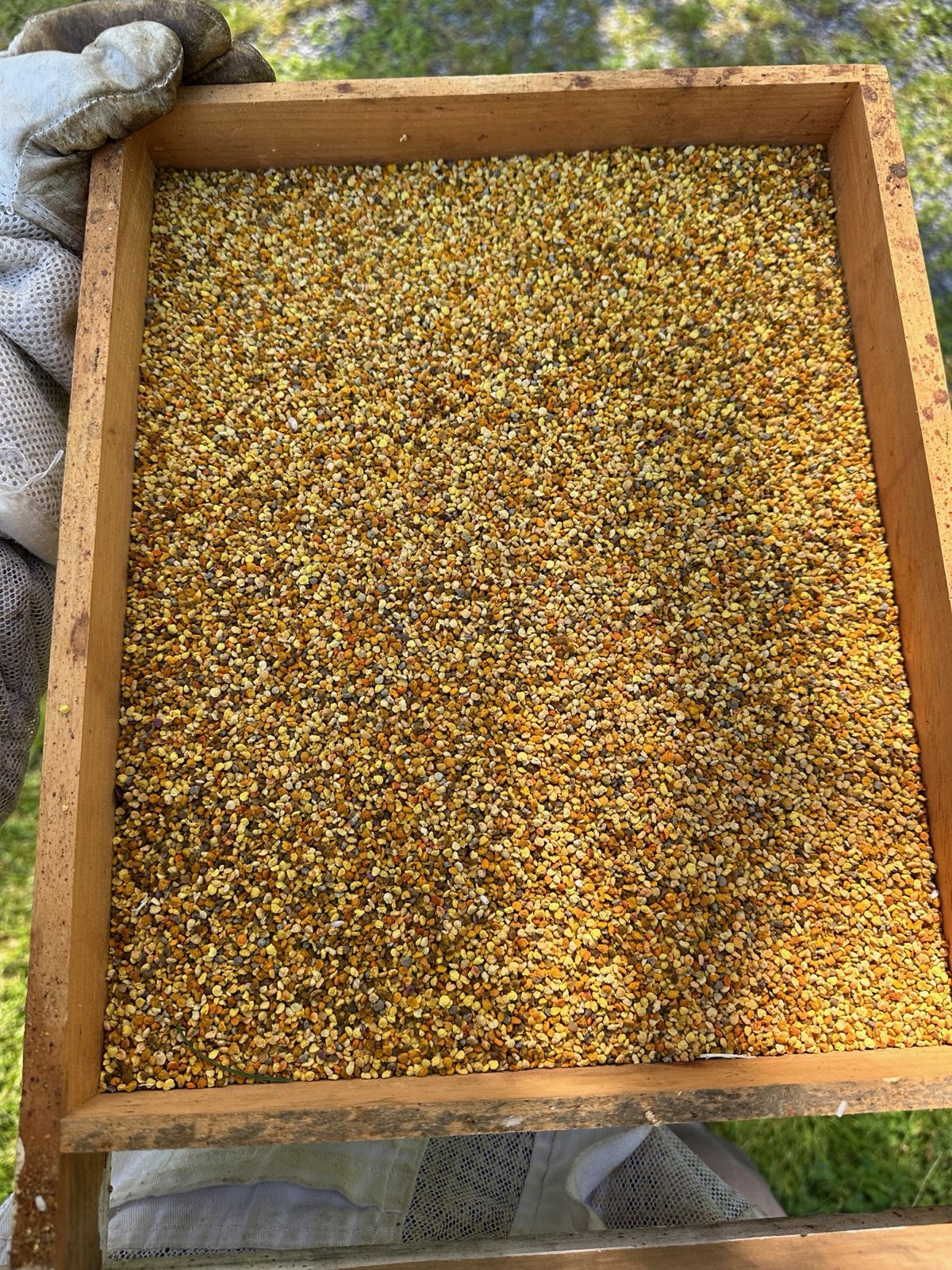
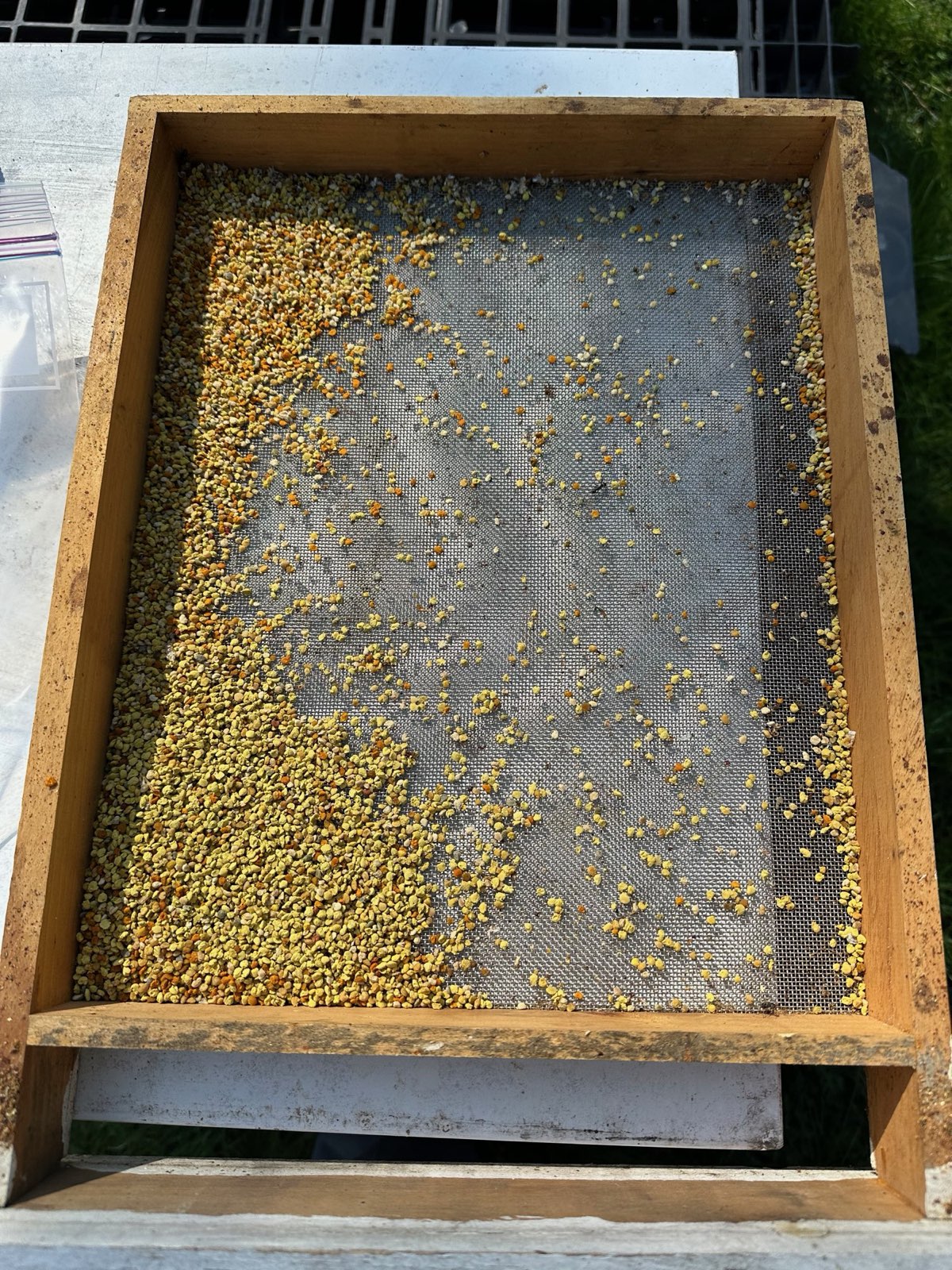
When a bee visits flowers, she brushes up loose pollen, mixes it with a little nectar and enzymes, and packs it into the "baskets" on her back legs — those bright yellow-orange lumps you see on a foraging bee. Back at the hive, this becomes the colony's protein source, feeding the developing young. Beekeepers collect a small share of it using a pollen trap at the hive entrance, which gently knocks a few granules off returning foragers.
Because it comes from many different flowers, bee pollen is a mix of colors — yellow, orange, brown, even purple — each granule from a different plant. That variety is part of what makes it interesting.
What's in it
Bee pollen is genuinely nutrient-dense for its size. It contains:
- Protein and amino acids — it's the hive's protein food, so this is the headline.
- Vitamins and minerals in trace amounts.
- Antioxidants from the flowers.
- Enzymes and other plant compounds.
The catch: the exact makeup varies batch to batch depending on which flowers were blooming, so no two harvests are identical. And "nutrient-dense" is relative — people eat it by the teaspoon, not the bowlful, so it's a small supplement, not a meal.
The honest take on the claims
You'll see bee pollen sold as a cure for fatigue, allergies, athletic performance, weight, and more. We're beekeepers, not doctors, so here's the straight version: bee pollen is a real, whole food with real nutrients, and plenty of people enjoy it and feel good using it. But the dramatic health claims are mostly not backed by strong human evidence. Treat it as a nice nutritional addition to your food — not medicine, and not a fix for a health problem. Nothing here is medical advice.
Read this before you try it: the allergy warning
This is the one part we won't soften. Bee pollen can cause serious allergic reactions in some people — occasionally severe ones. Take it seriously if:
- You have pollen allergies or hay fever, or
- You're allergic to bees or bee stings.
If either applies, talk to your doctor before trying it. Even if not, start with a tiny amount — a few granules — and wait a day to see how you react before working up to a normal serving. Don't give it to infants, and if you're pregnant or nursing, check with your doctor first.
How to use it
Bee pollen has a mildly sweet, floral, slightly bitter taste and a texture that softens as it sits in food. Once you've confirmed it agrees with you, easy ways to use it:
- Sprinkled over yogurt, oatmeal, or fruit.
- Blended into a smoothie.
- Stirred into honey (a natural pairing — see the health benefits of raw local honey).
- On top of toast with nut butter.
Keep it fresh: bee pollen is best stored cool. We keep ours refrigerated, and you should too once you get it home.
Getting our pollen
We collect bee pollen seasonally, and supply depends entirely on what the bees bring in — some years more than others. When we have it, it's at the honey stand, kept refrigerated for freshness, alongside propolis when there's a batch. Call ahead if you want to check current supply.
Seasonal & fresh
Locally collected pollen at the stand when the season provides — 3502 High St., Harrisburg.
Visit the honey stand