How to do an alcohol wash for varroa mites
If you keep bees in Pennsylvania and you're not counting mites, you're guessing — and varroa punishes guessing. The alcohol wash is the most accurate count there is. It costs you about 300 bees and ten minutes, and it's the best data you'll collect all season.
Why an alcohol wash (and not a sugar roll)?
Both methods sample roughly 300 bees and dislodge mites so you can count them. The sugar roll spares the bees but under-counts — mites cling on through powdered sugar more than people want to believe, especially in humid weather. The alcohol wash kills the sample but recovers nearly all the mites. We'd rather lose 300 bees to good data than lose 40,000 to a bad treatment decision. A queen lays that many eggs in a day and a half.
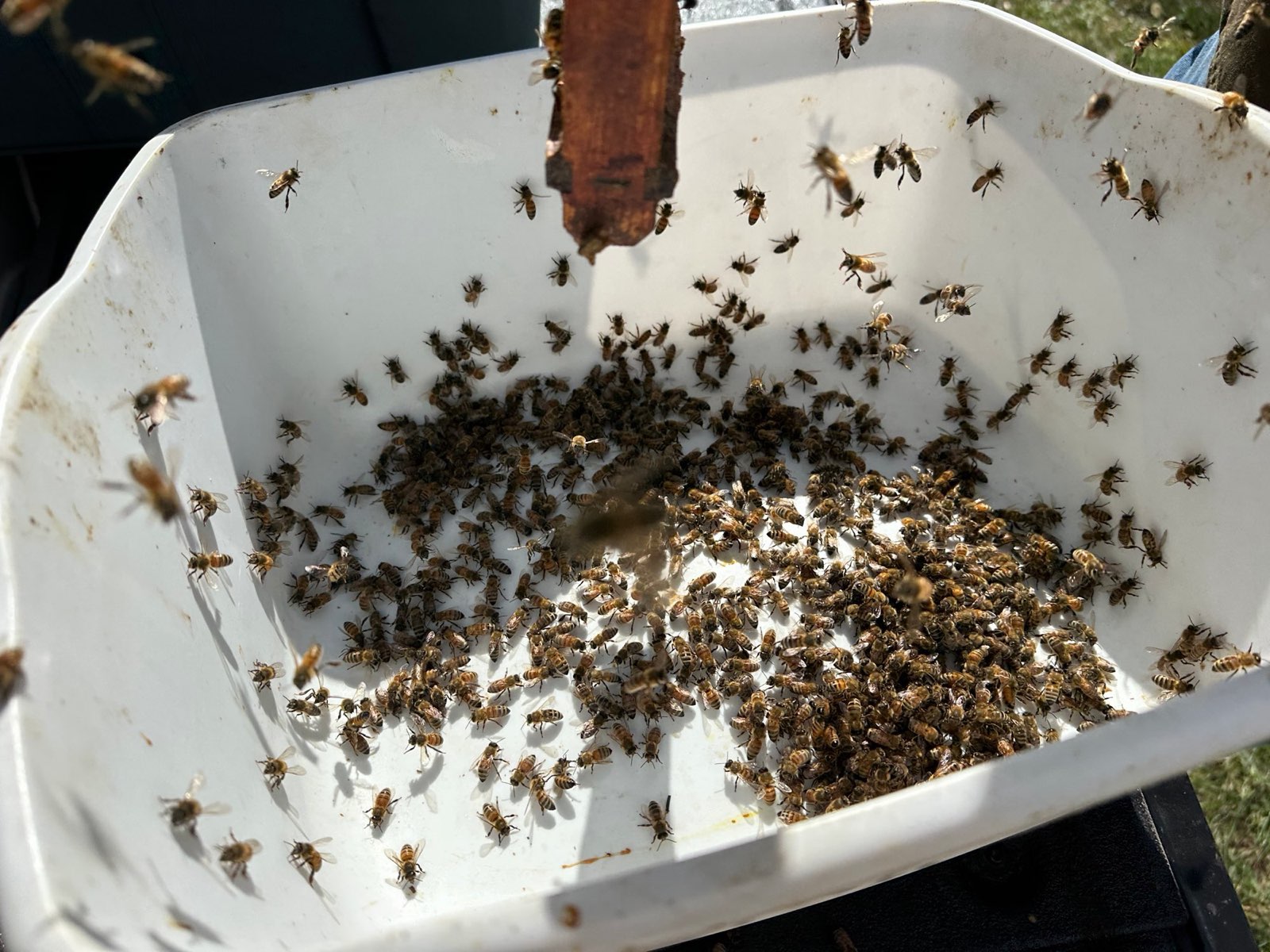
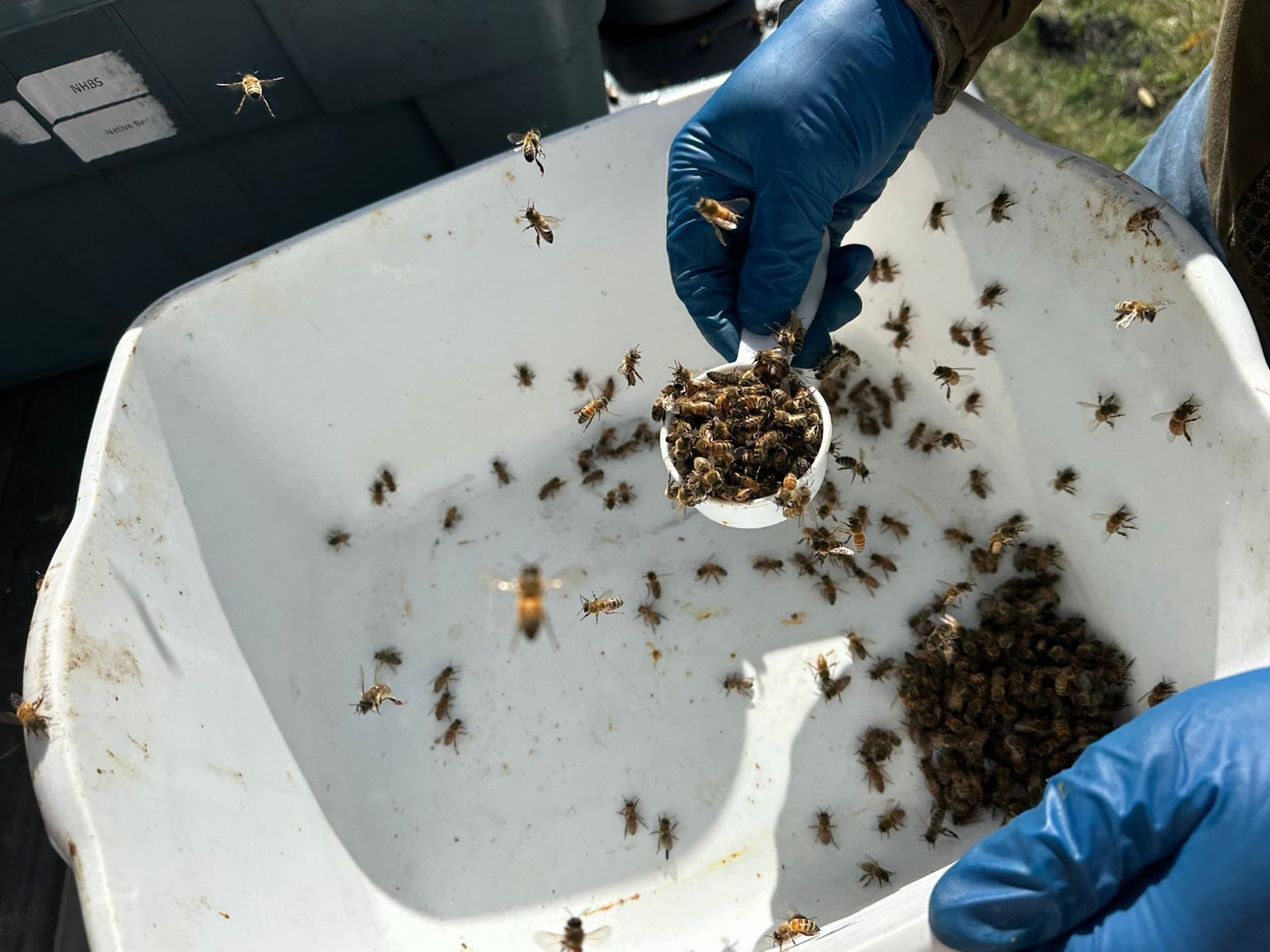
What you need
- A wash cup — a commercial two-chamber shaker (Varroa EasyCheck style) or a homemade mason-jar rig with #8 hardware cloth in the lid.
- Alcohol — 70% isopropyl works; so does winter windshield washer fluid. You need enough to cover the bees by an inch.
- A half-cup measure. Level half-cup of bees ≈ 300 bees. That's the magic number the math is built on.
- A light-colored tub or hive lid to shake bees into for collecting.
Step by step
- Pull a brood frame. Sample from a frame of open brood in the brood nest — that's where mites concentrate, because they're looking for cells to slip into. A honey-super frame will under-count badly.
- FIND THE QUEEN FIRST. Look at the frame before you shake it. Washing your queen is the classic self-inflicted wound of mite monitoring. If you can't find her, set the frame aside and pull another.
- Shake bees into the tub, give the tub a sharp bump to pile them in a corner, and scoop a level half-cup. Pour them into the wash cup with the alcohol.
- Swirl or shake steadily for a full 60 seconds. Don't be gentle — the agitation is what breaks the mites' grip. Some people shake, rest a minute, and shake again; it recovers a few extra mites.
- Count the mites that fall through the screen into the liquid. They're reddish-brown ovals, easy to see against the pale alcohol.
- Divide by 3. Mites ÷ 300 bees × 100 = mites per 100 bees. Nine mites in the cup = 3 per 100 bees = a colony that needs your attention. See our companion article on what the thresholds mean in PA.
When to wash
Once a month during the active season is the gold standard. At minimum, hit the moments that decide winter survival in Central PA: early spring (before the population explodes), mid-summer around the solstice (mite loads climb while colonies plateau), early August (the big one — this count decides whether your winter bees get raised healthy), and after any treatment to verify it actually worked. A treatment you didn't verify is a hope, not a treatment.
The mistakes that ruin the count
- Sampling from a honey super instead of the brood nest (under-counts).
- Eyeballing "about half a cup" (the math assumes 300 bees).
- Shaking for 15 seconds instead of 60 (mites stay attached).
- Skipping the post-treatment recheck.
- Washing the queen. Look. Twice.
If you'd rather learn this hands-on, monitoring is one of the first things we teach in beekeeping mentorship — your hive, your bees, real counts, and a management plan built on the numbers.
Want hands-on help with mite monitoring?
Our mentorship covers alcohol washes, thresholds, and treatment decisions — in your own apiary.
Call or Text 717-379-3248