Getting your hives through storm season
Every summer, Central PA storms tip over hives that didn't need to fall. A tipped hive is spilled brood, crushed comb, and sometimes a lost queen — all preventable with a few cheap steps before the wind comes.
We've written separately about what to do when a hive has already gone over. This one is about the easier half of the problem: keeping it standing in the first place. None of this is expensive or complicated — it's the difference between checking on your bees after a storm and rebuilding them.
Start with the stand
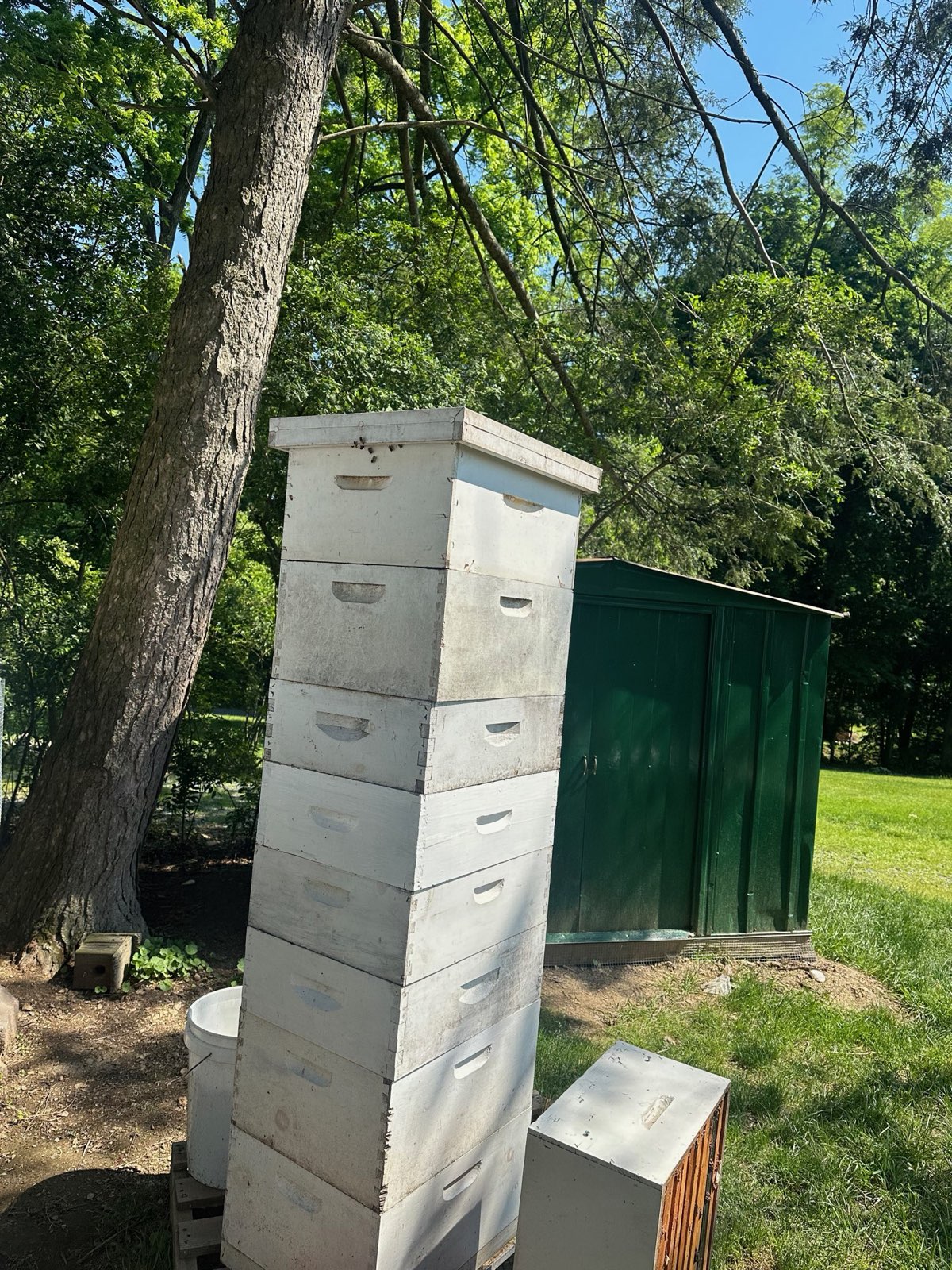
Most storm losses trace back to the stand, not the hive. A hive is a tall, top-heavy stack of boxes; the taller it gets through summer as you add supers, the easier it tips.
- Keep it low and solid. A stand only needs to lift the hive off the wet ground — 8 to 16 inches is plenty. Tall, spindly stands are the first to go over.
- Level and stable underneath. Set the stand on firm, level ground or on pavers so a downpour doesn't wash out one leg and drop the whole thing. A hive leaning even slightly is a head start for the wind.
- Anchor the stand if you can. Cinder-block or metal stands can be staked or set on a base that won't walk in soft, saturated soil.
Strap the boxes together
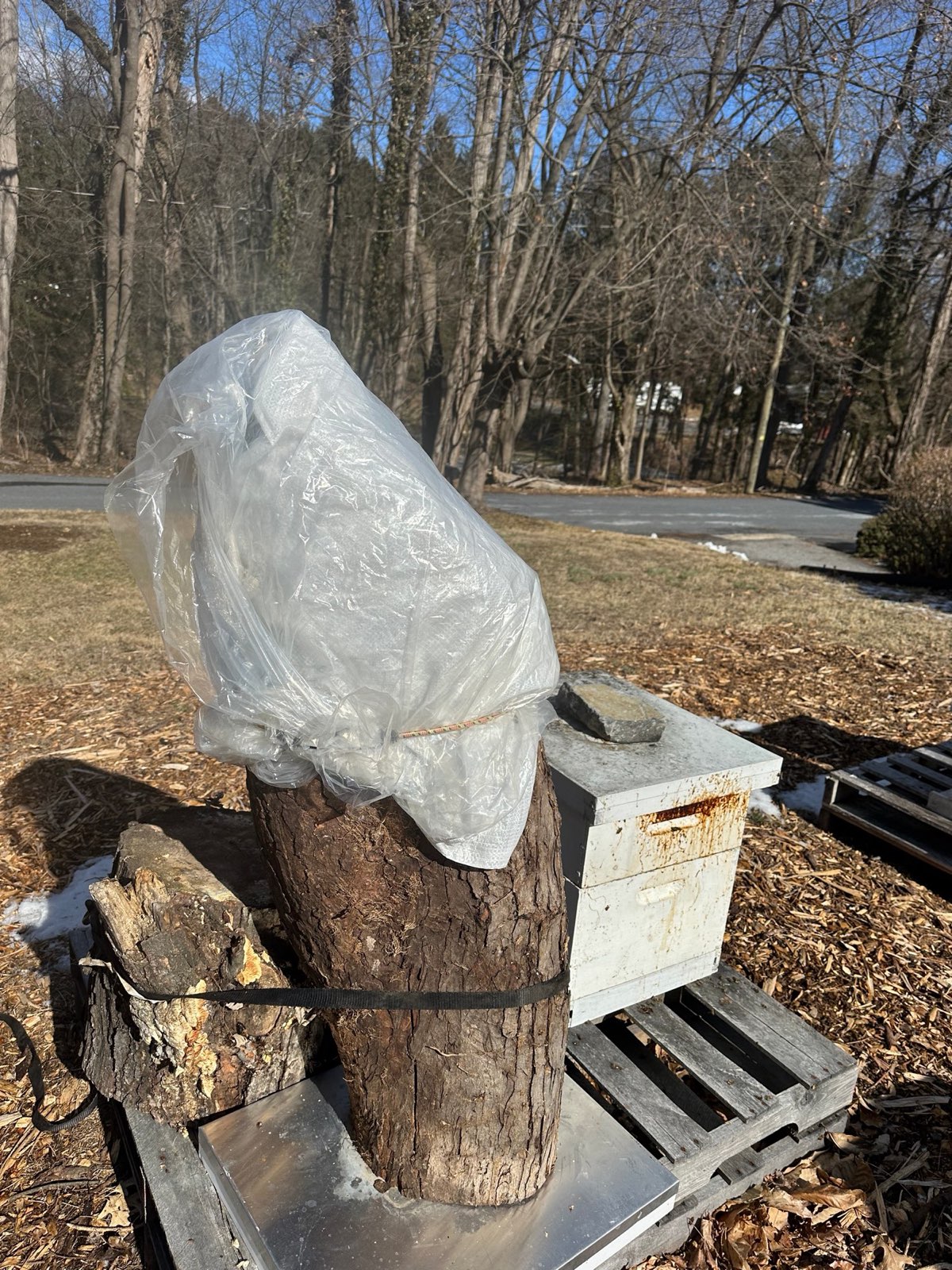
The single most effective thing you can do is a ratchet strap around the whole hive — over the outer cover, down both sides, under the stand or bottom board — cinched snug. It ties the stack into one unit so wind can't peel the lid off or slide the boxes apart. A pair of straps crossed, or one strap plus the steps below, will hold through almost anything short of a falling tree. Emergency ratchet straps cost a few dollars each and are the best insurance in beekeeping.
Weight the lid
If you're not strapping, at minimum weight the top. A patio paver, a heavy rock, or a cinder block on the outer cover keeps the lid from sailing off in a gust — which is how rain gets in and chills the brood even when the hive stays upright. Strapping is better because it holds the whole stack; weight only holds the lid.
Site the hives with wind in mind
- Use a windbreak, not a wind tunnel. A building, fence line, or hedgerow on the prevailing-wind side (generally the west/northwest here) takes the punch out of a gust. Avoid open, exposed ridgetops and the gap between two buildings where wind funnels and accelerates.
- Look up before you place a hive. Dead limbs and leaning trees overhead are the one thing straps can't save you from. Don't put a yard under a widow-maker.
- Point entrances away from the driving wind and rain so storms don't blow straight into the hive.
Before a storm you know is coming
When the forecast turns, a five-minute walk through the yard pays off: strap anything unstrapped, add weight to any bare lids, close up ventilation you don't need, and clear or note any hanging limbs. Make sure each hive is sitting level and square on its stand. That's it — that quick pass is usually the whole difference.
After it blows through
Once the weather clears, check each hive is upright and the lid sealed, and look for water intrusion. If one did go over despite your best efforts, our companion article walks through restacking a tipped hive and checking the queen. And if you come out to a colony that's beyond saving on your own, call us — 717-379-3248.
Want a hand with your bees?
Whether it's storm-proofing, a tipped hive, or a queen question, we're a phone call away. Central PA beekeepers, reach out anytime.
Call or Text 717-379-3248