A storm knocked down a tree with bees in it — what do I do?
High winds in Central PA regularly bring down limbs and whole trees that turn out to have a honey bee colony living inside. If you're standing over a fallen tree humming with bees, here's what to do — and how we can help.
We get these calls every storm season. A summer thunderstorm or a line of high wind comes through, and the next morning someone finds a downed tree or a big broken limb with bees pouring in and out of a split in the wood. Sometimes it's a managed hive that the wind simply blew over. The situations look alike but they're handled a little differently, so let's take them one at a time.
First: is it honey bees?
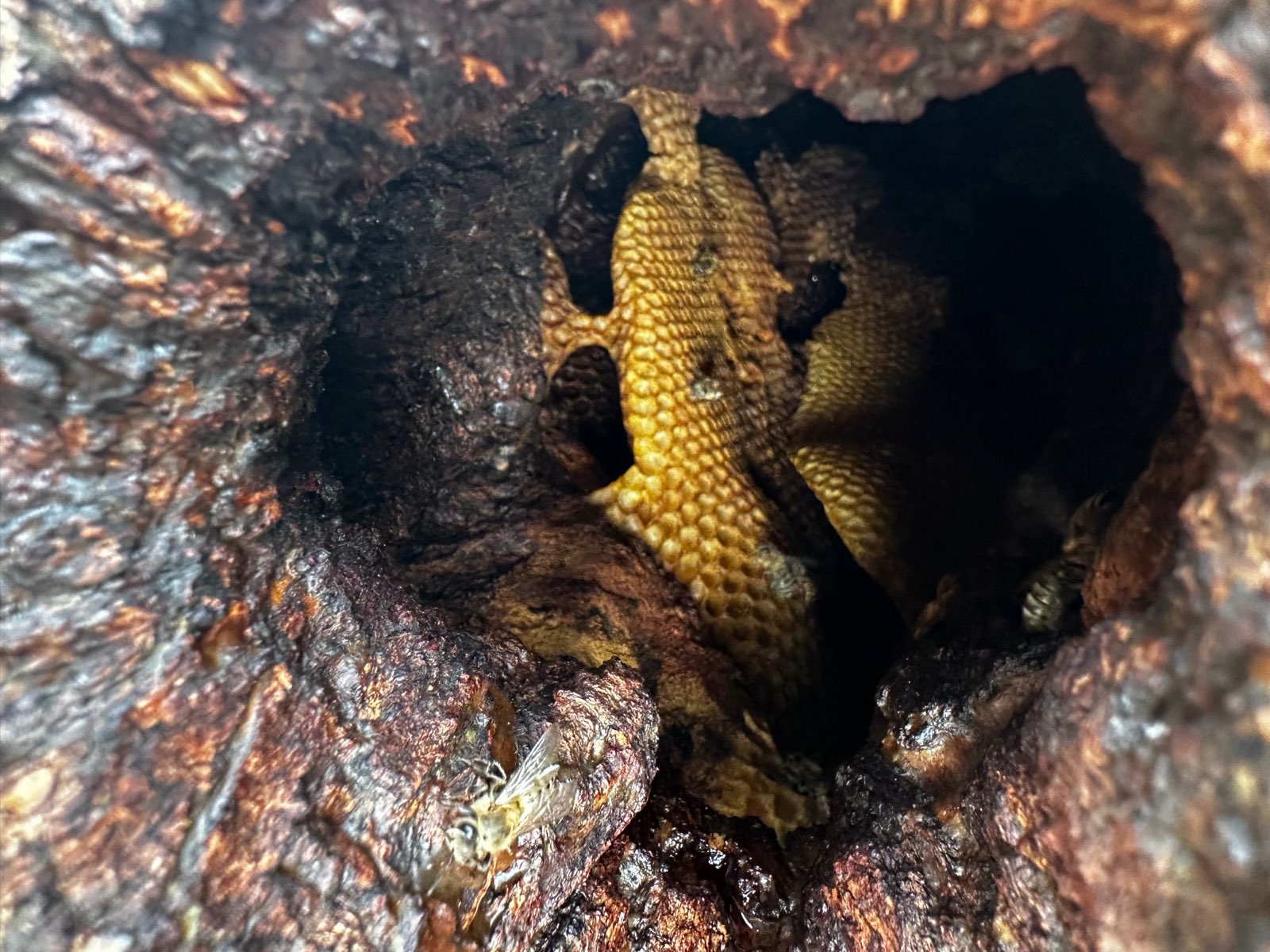
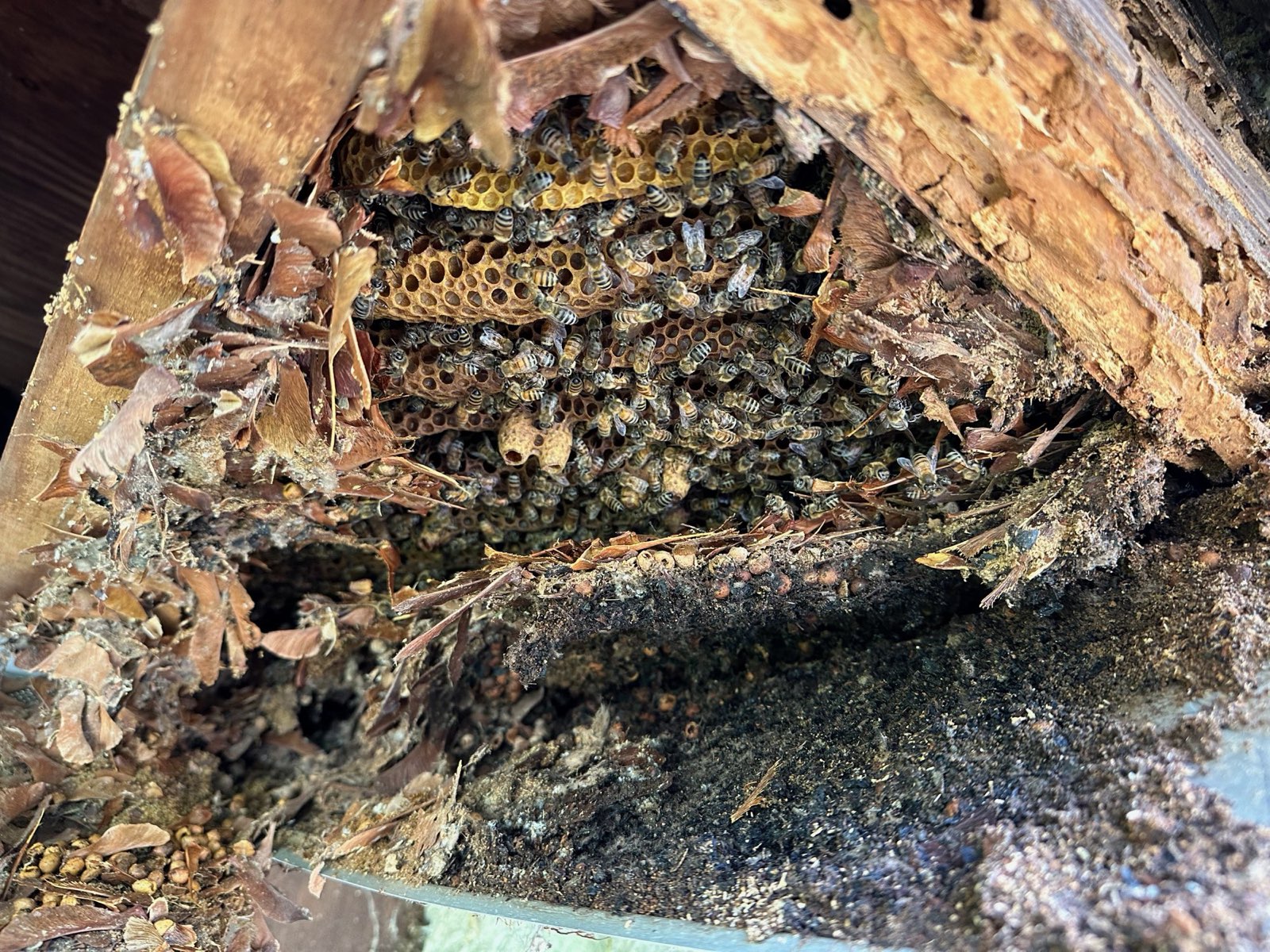
Before anything else, it helps to know what you're looking at. Honey bees living in a tree cavity build wax comb inside the hollow — if the tree split open you may actually see sheets of honeycomb. The bees are golden-brown, and there are a lot of them, coming and going from one main opening. That's a feral honey bee colony, and it's worth saving.
Yellow jackets and hornets, by contrast, build papery gray nests, not wax comb, and are far more aggressive when disturbed. If you're not sure, send us a photo from a safe distance — we identify stinging insects for free, and wasp nests are a job for our sister company, Lawns Plants & Pests, not the apiary.
If it's a tree colony that came down
A colony that's lived in a tree for a season or more has comb, brood, and honey stores inside the cavity. When the tree falls, the colony is suddenly exposed, disoriented, and — understandably — defensive. Here's what to do:
- Keep your distance and keep others back. A freshly downed colony is far more defensive than a calm swarm on a branch. Rope off the area if kids or pets are around. Give it room until it can be handled properly.
- Don't spray it, don't burn it, don't seal it up. Insecticide, gasoline, and expanding foam are the three things people reach for — and all three kill a colony that can usually be saved and relocated alive. It also makes the honey and comb hazardous to remove.
- Leave the wood where it is if you safely can. The more of the cavity and comb that stays intact, the better the odds of moving the colony successfully. Don't start cutting the log into pieces — that shreds the comb and the brood.
- Call us. The sooner we get to it, the better the colony's chances. Fresh exposure, rain, and heat are all working against the bees once the tree is open.
If it's a managed hive that blew over
If you keep bees and came out to find a hive tipped over — boxes on the ground, frames spilled, bees roaring — move quickly but calmly:
- Suit up before you touch it. A knocked-over colony is defensive. Full gear, smoker lit.
- Restack in the right order. Bottom board, brood boxes, then supers, then inner and outer cover. Get the frames back into the boxes hanging the right way before too much comb gets crushed or cross-built.
- Get it off the wet ground and level. Set it back on its stand (or anything that lifts it off the soil), and level it so the bees rebuild straight comb.
- Check the queen over the next week. Look for eggs and normal laying a few days later to confirm she survived the tumble. If the colony seems hopelessly queenless afterward, give us a call — we raise PA-bred queens and can talk you through requeening.
Once the emergency is handled, it's worth making sure it doesn't happen again — a few cheap steps keep hives standing through the next blow. We cover them in getting your hives through storm season.
What we do with a rescued tree colony
When we relocate a storm-downed colony, we work the comb and brood out of the cavity by hand, tie the good brood comb into frames, and get the bees — queen included wherever possible — into a proper hive box. The colony goes to one of our yards to recover, or to a beekeeper who wants it. It's the same careful, no-pesticide approach we use for a structural bee removal — just with a tree on the ground instead of a wall.
Storm brought down a colony?
Call or text 717-379-3248 with a photo. We identify honey bees vs. wasps free, and we relocate downed colonies alive whenever we can.
Call or Text 717-379-3248