Bees in your soffit
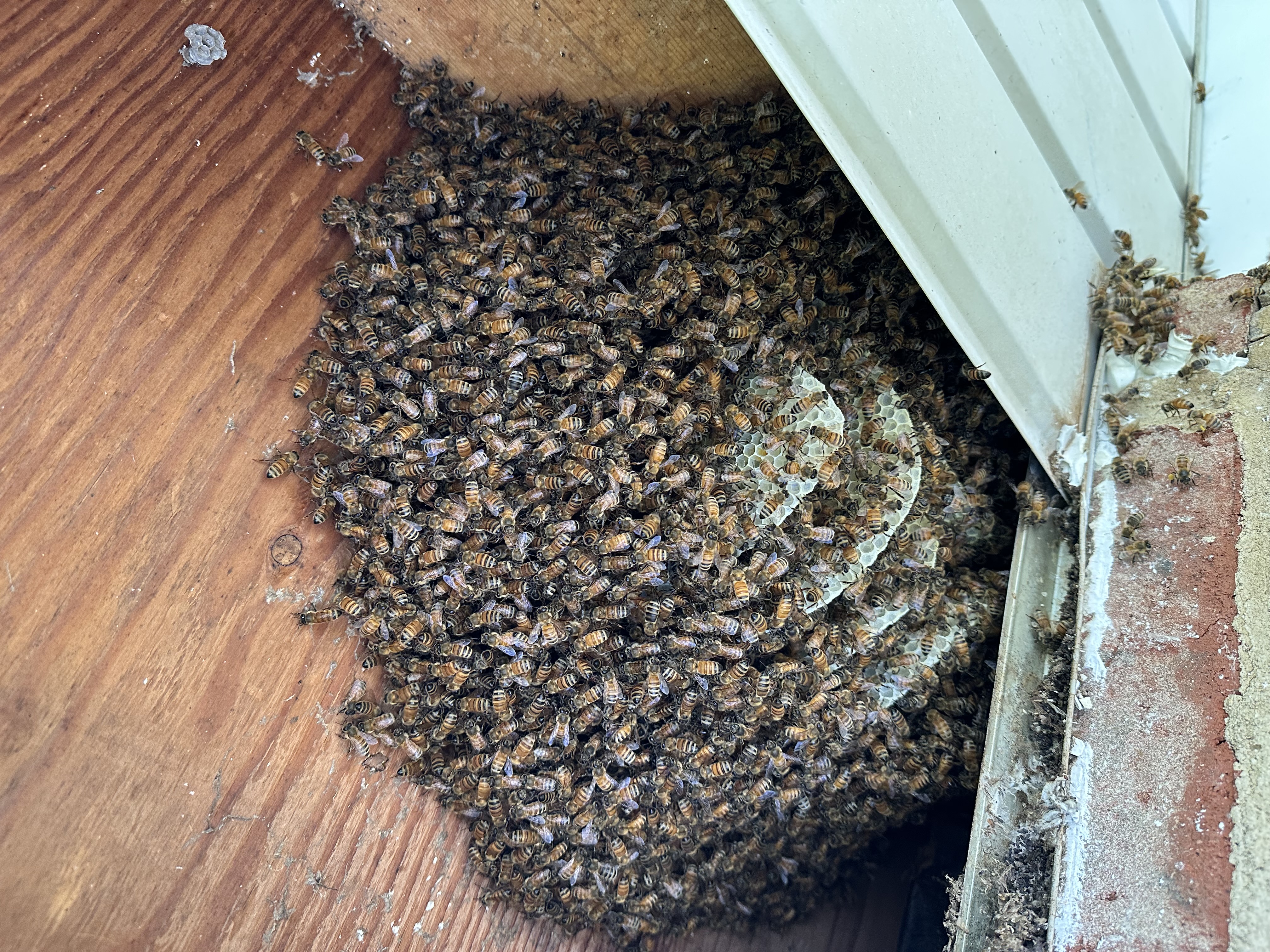
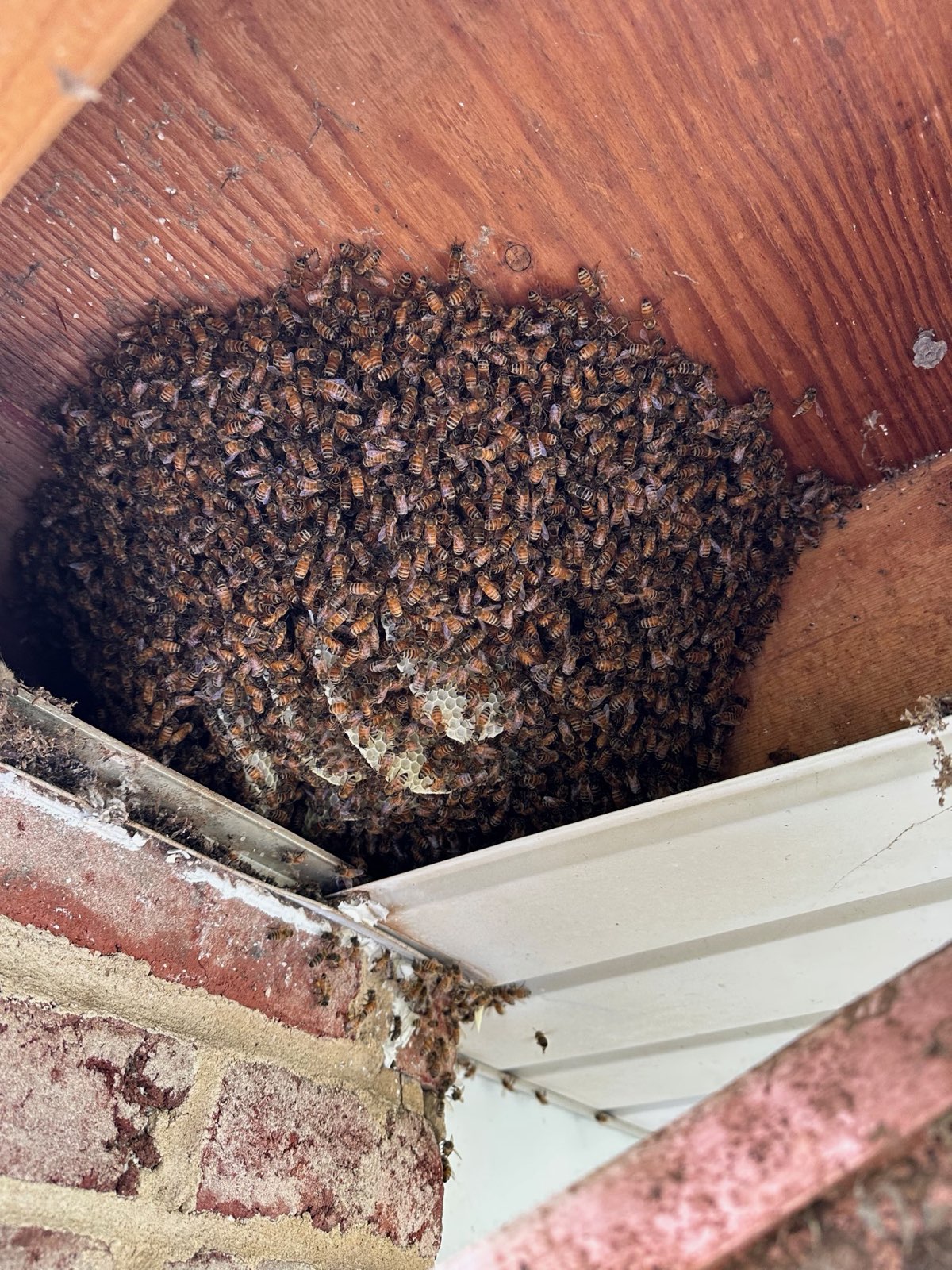
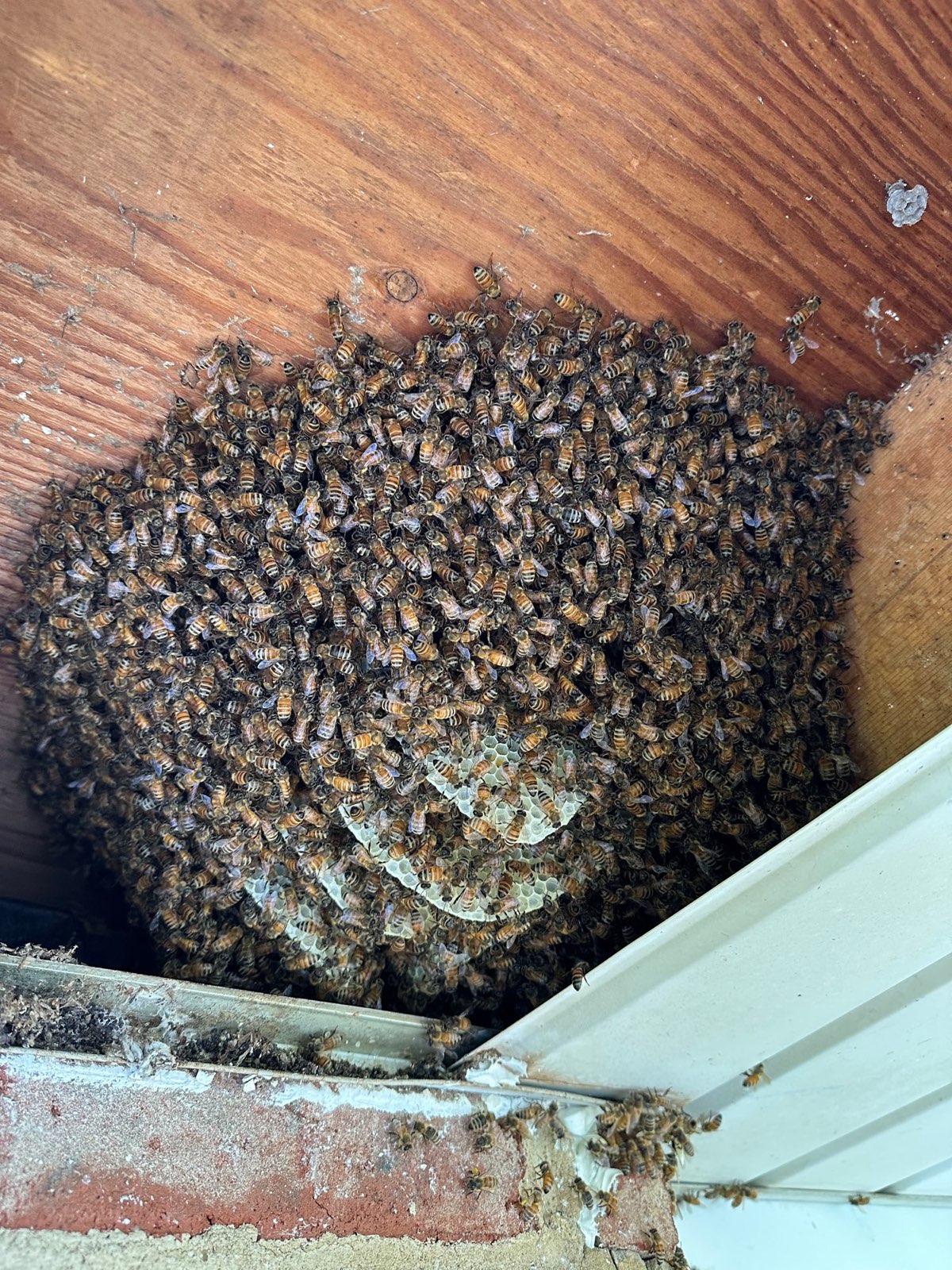
Bee traffic along your roofline, in and out of the same spot at the corner of the soffit, all day long. Soffits are the single most common place we pull honey bees out of Central PA houses — and the good news is it's usually aluminum or vinyl that comes down clean and goes right back up. The bad news is the colony gets bigger and heavier every week you wait.
Why bees love soffits
In spring, swarm scouts hunt for a dry cavity with a small defensible entrance, out of the weather, up high. Your soffit corner checks every box. One warm April or May afternoon you'll notice a cloud of bees around an eave — that's move-in day. Within weeks the colony is drawing comb in the soffit bay, and because soffits open into the attic edge, an established colony often expands along the eave and into the attic itself.
What you'll see from the ground: steady bee traffic at one spot along the roofline, most active mid-morning to afternoon. What you won't see: the comb — which is why soffit colonies get big before anyone realizes how established they are.
Why spraying up there backfires
- Spraying from the ground doesn't reach the colony. The comb is feet away from the entrance, around framing. You'll kill some foragers, make the rest defensive, and change nothing.
- Killing the colony leaves the honey. A soffit colony's comb and honey sit directly above your fascia, walls, and — once they've spread — your attic insulation and ceiling. Dead colony, hot July week, and the honey lets go. Ceiling stains are the cheap version of how that story ends.
- Foam-sealing the gap traps them inside — and bees trapped at the attic edge follow light into the house. Ask anyone who's woken up to bees in an upstairs bedroom.
How soffit removal works
- Confirm what and where. Honey bees vs. yellow jackets first (text us a photo — or see our ID guide), then we trace how far along the eave the colony runs. Yellow jackets in a soffit are a job for our sister company Lawns Plants & Pests.
- Open the soffit. Aluminum and vinyl panels come down cleanly and usually go right back up; wood soffits are opened at the seams where possible. We work from ladders or the roof depending on height and pitch.
- Vacuum the bees alive, cage the queen, and cut out all comb — brood comb comes with us to be rubber-banded into frames so the colony rebuilds at our apiary.
- Remove every trace of honey, clean the cavity, and seal the entry gap — plus the matching gaps elsewhere along the eave, because next spring's scouts will find the one you didn't fix.
- Reinstall the soffit. Aluminum and vinyl usually close up same-day, good as before.
Soffit bee FAQ
They just showed up this week in a big noisy cloud. Same job?
Maybe a smaller one! A cloud of bees at the eave in spring may be a swarm that moved in days ago — minimal comb, no honey weight yet. Call fast: a colony that's been in the soffit a week is a far easier removal than one that's been there since last year.
Have they gotten into my attic?
Established colonies often extend from the soffit bay into the attic edge. We check from both sides and tell you exactly where the comb ends before we open anything.
Is it dangerous to leave them until fall?
It's not dangerous — honey bees aren't aggressive coming and going — but the job doubles in size over a summer. More comb, more honey, more opened soffit, bigger repair. Sooner is genuinely cheaper.
Do you work on two- and three-story houses?
Yes. Height changes the setup, not the answer. We'll tell you at the estimate exactly how we'd access it.
Bee traffic at your roofline?
Soffit bee removal across Harrisburg, Hershey, Camp Hill, Mechanicsburg, and Central PA. Free estimates — bees relocated, never exterminated.
Call or Text 717-379-3248