When is honey harvest season in Central PA?
"Is the new honey in yet?" is the question we hear most at the stand. The answer: Central PA honey comes in two distinct harvests — and they taste nothing alike.
Honey follows the bloom
Bees don't make honey on a schedule — they make it when nectar is flowing. In Central PA, the nectar year has two main acts:
- The spring flow (May–June). Black locust, tulip poplar, clover, and a parade of spring blooms. This is the big one — most of the year's honey is made in these six to eight weeks.
- The summer dearth (July–August). Hot, dry weeks when little is blooming. The bees live off stores, and beekeepers pull the spring crop.
- The fall flow (late August–September). Goldenrod and asters light up the roadsides and fields. It's a shorter, weather-dependent flow, but it produces a honey all its own.
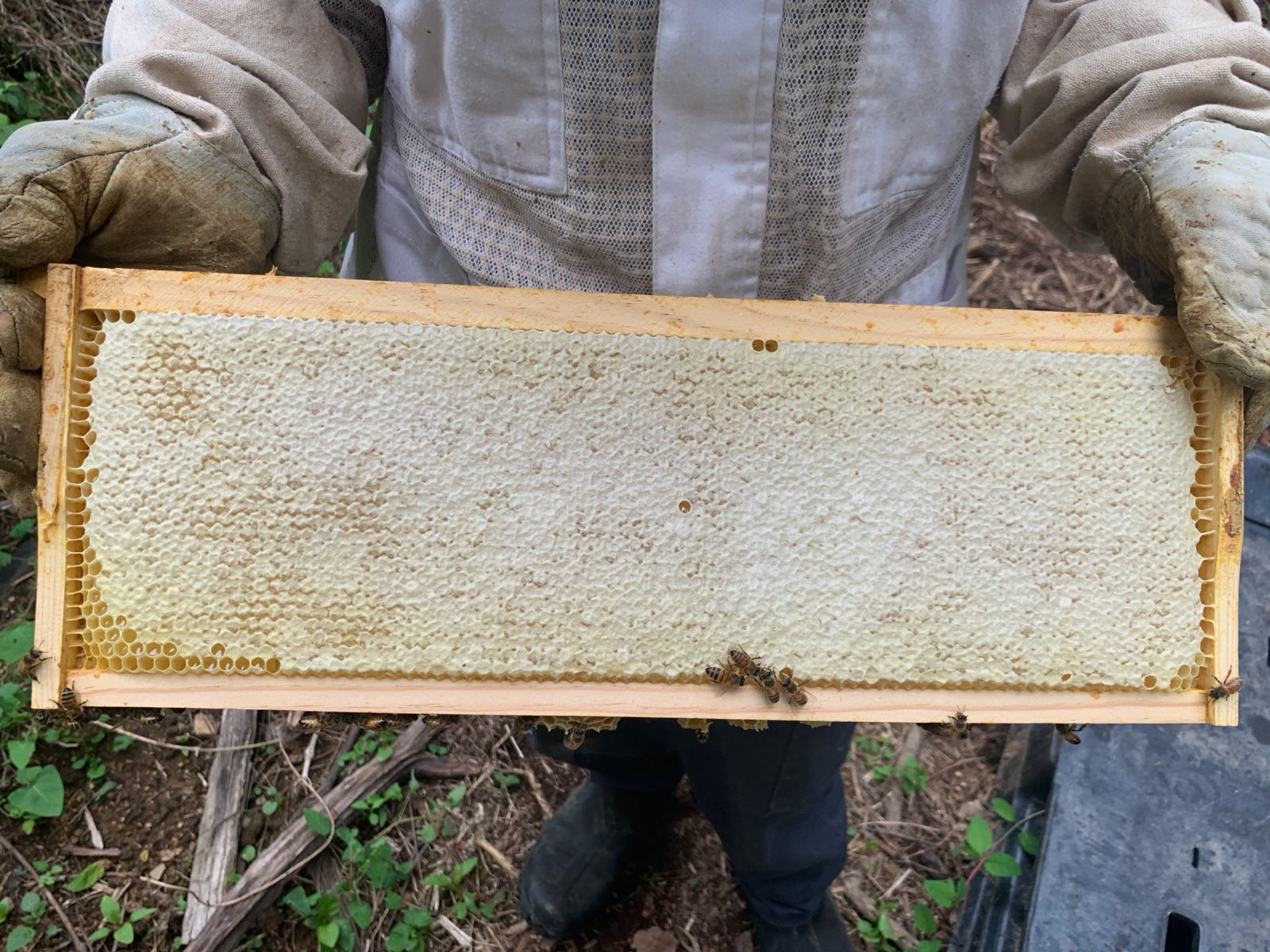
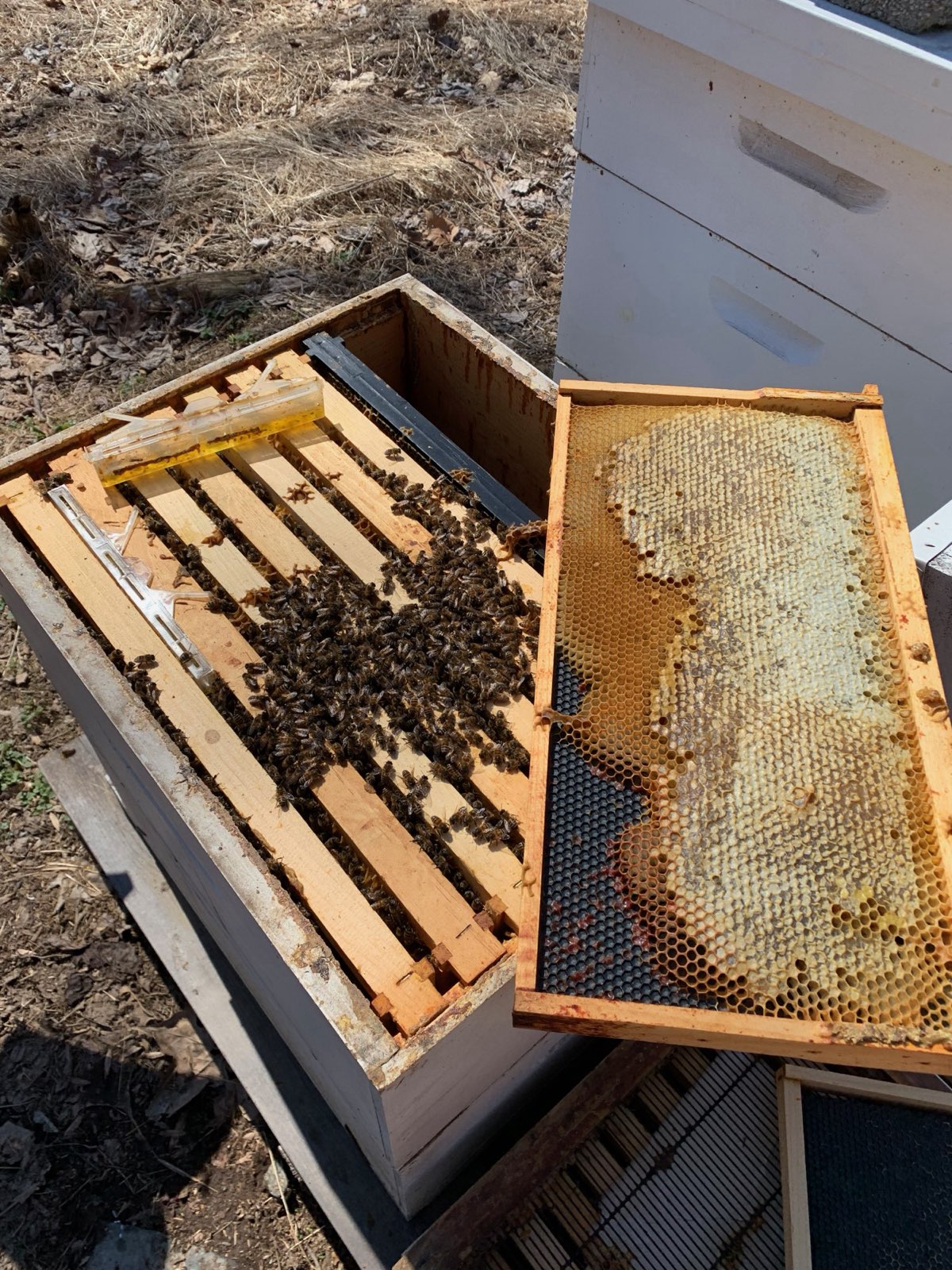
Harvest #1: the July pull
Once the spring flow ends and the bees have capped the honey with wax — their signal that it's cured and ready — we pull supers, usually in July. Each frame is uncapped, spun in an extractor, allowed to settle, and jarred. Nothing else: no heat, no fine filtering. That's what keeps it raw.
Spring honey is light — pale gold, delicate, floral. If you like honey in tea or drizzled where you can taste the subtlety, this is your jar.
Harvest #2: the fall crop
The goldenrod flow gets pulled in late September or October, and it's a different creature entirely: darker amber, bolder, almost buttery, with the deeper flavor that fans of "dark honey" seek out. Some years the fall flow is generous; some years the weather shortens it and the fall crop sells out fast.
So when should you buy?
Honey doesn't spoil — a jar from last season is every bit as good as the day it was jarred (see how to store raw honey). But if you're after a particular harvest:
- Mid-July onward: the new spring crop hits the stand — light, floral, and the year's biggest supply.
- October: fall goldenrod honey arrives — darker, bolder, and usually limited.
- Winter–spring: whatever the previous season provided. When it's gone, it's gone until July.
The honey stand at 3502 High St. is self-serve and stocked year-round as supply allows — and if your jar crystallizes on the shelf, that's a feature, not a flaw.
Taste the difference a season makes.
Fresh local honey, harvested a few miles from where you're reading this. Visit the stand or reach out.
Visit the Honey Stand