Real bee removal vs. lead-generation sites
Search "bee removal near me" and most of what comes back isn't a beekeeper. It's a middleman who sells your phone number. Here's how to tell them apart in about thirty seconds.
What a lead-gen site actually is
A lead-generation site is a website built to rank in search results and collect your contact information — nothing more. It isn't a company that removes bees. When you fill out the form or call the number, your information gets sold to whoever is paying for leads in your zip code that week.
Sometimes that's a legitimate local company. Often it's an exterminator two counties away who will spray the colony, or a contractor who has never opened a hive. Sometimes nobody calls you back at all, and your number ends up on a list that gets resold.
These sites rank well because that's the only thing they're built to do. A one-person beekeeping operation is busy keeping bees; a lead-gen company is busy doing SEO. That's why the top of the results page often looks the way it does.
Red flags on the website itself
- No person's name anywhere. Real beekeepers put their name on the work. Lead-gen sites say "our technicians" and "our network of professionals."
- No physical address, or an address that turns out to be a mail drop. Search the address in Google Maps and see what's actually there.
- Hundreds of city pages with identical text. If "Bee Removal in Hummelstown" and "Bee Removal in Boise" are the same paragraph with the town swapped, nobody local wrote it.
- "Serving all 50 states" or a service area that covers half the country. Bees are local work — you can't drive to a wall cutout four states away.
- Form first, phone second. If getting a human requires submitting your information first, the information is the product.
- Nothing about what happens to the bees. A real beekeeper will tell you where the colony goes. A lead-gen site doesn't know, because it doesn't do the work.
- Stock photos. Right-click, search the image. If the "our team" photo is a stock beekeeper in a field in Slovenia, that tells you something.
- Reviews with no specifics. Real local reviews mention towns, names, and what the job actually was. Generic five-star blurbs with no detail are cheap to buy.
Three questions that settle it on the phone
If you're still not sure, call and ask these. A real beekeeper answers all three without hesitating.
1. "What happens to the bees after you take them?"
A beekeeper has a specific answer: where the hives are, what they do with the colony when it arrives, whether they inspect it for mites and disease before adding it to their yard. A middleman gives you a vague one, or says "they're relocated safely" and changes the subject.
2. "Are you on your state or county beekeepers association swarm list?"
In Pennsylvania that's the Pennsylvania State Beekeepers Association and your county association — for the Harrisburg area, the Capital Area Beekeepers Association. These lists are public, free to check, and made up of actual keepers who've agreed to take swarm calls. A lead-gen site has no idea what you're asking about.
3. "Is this honey bees, or could it be something else?"
Most calls people make about "bees" turn out to be yellow jackets, hornets, carpenter bees, or bumble bees. A real beekeeper will ask you for a photo and will tell you honestly when it isn't a honey bee job — because taking money for the wrong service is how you lose a neighbor. Someone selling leads has no reason to talk you out of anything.
Why "free" isn't automatically a red flag
Free swarm collection is normal and legitimate. A swarm hanging on a branch is a healthy colony looking for a home, and a beekeeper who collects it gets bees out of it — that's a fair trade, and most keepers will do it for nothing.
What should raise an eyebrow is "free removal" advertised for a colony living inside a wall. That's hours of work, structural opening, comb extraction, and cleanup. Nobody does that for free. If a site advertises free structural removal, either they're planning to upsell hard when they arrive, or they're collecting your information and moving on.
What we are
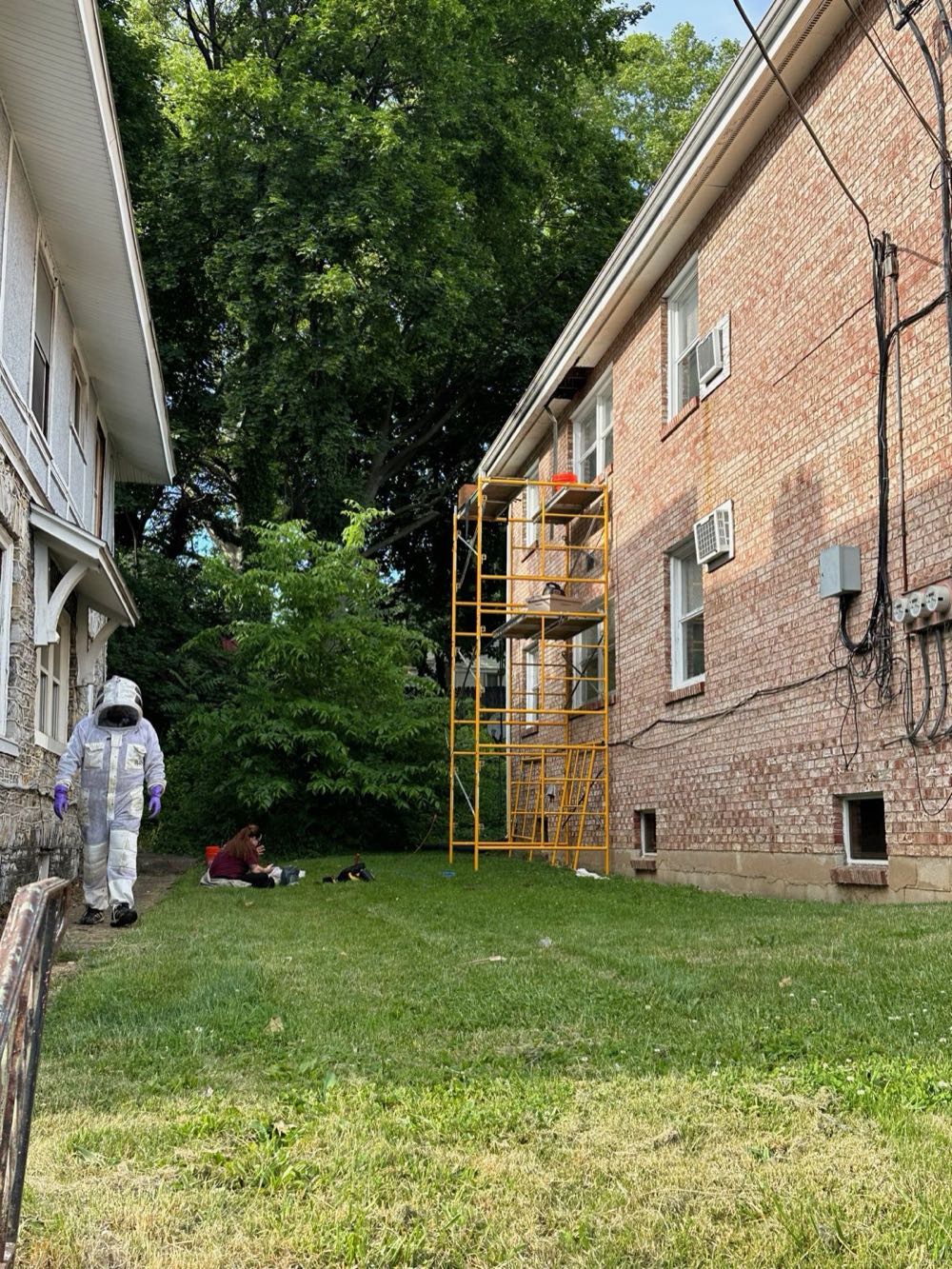
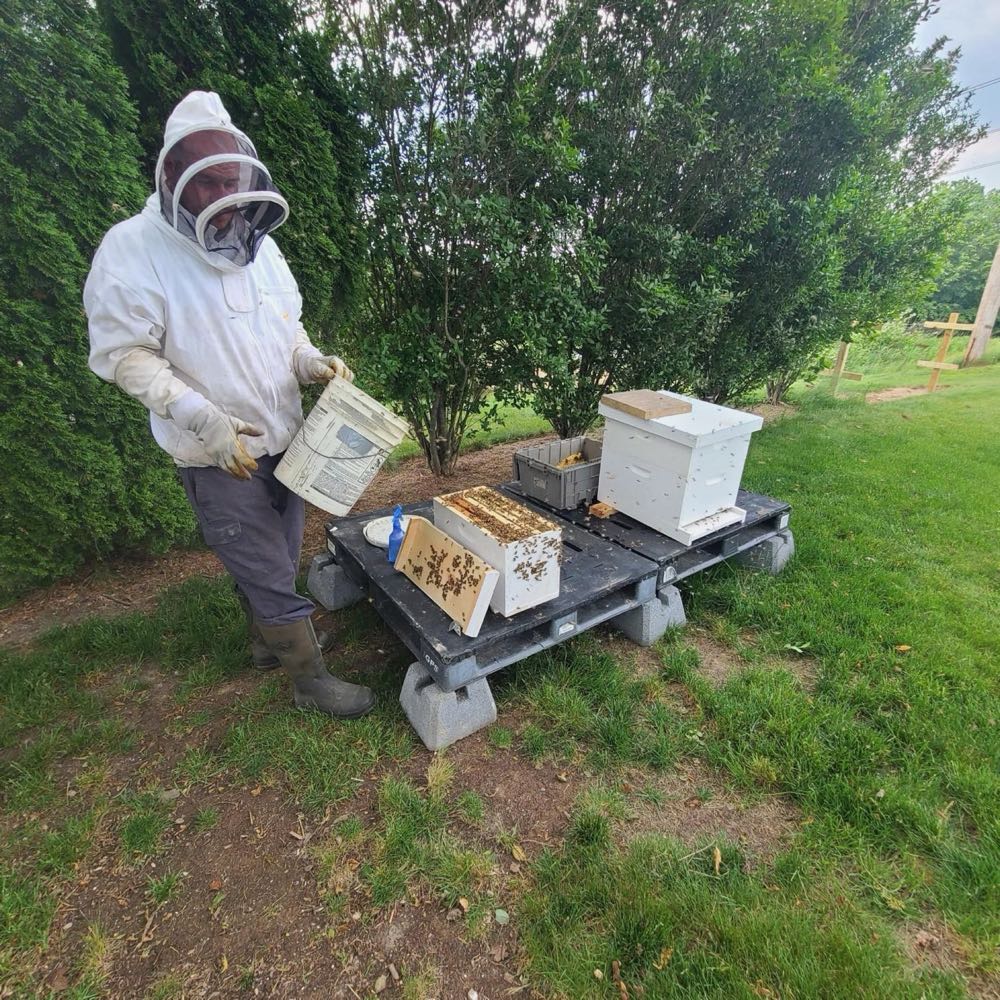
The Alleman Apiary is run by Devon and Elyse Alleman out of 3502 High St. in Harrisburg, where the hives and the honey stand actually are. We're listed swarm collectors with the Pennsylvania State Beekeepers Association and the Capital Area Beekeepers Association. The person who answers the phone is the person who shows up.
Colonies we remove go into our own hives — inspected for varroa and disease, requeened or combined as needed, and kept working. Swarms are collected alive and almost always free. Structural removals are quoted honestly, because opening a wall is real work.
And when it turns out you've got yellow jackets or hornets instead, we say so and route it to our licensed sister company, Lawns Plants & Pests LLC, at the same number. One call, honest answer, no lead sold to anybody.
Related reading
Talk to an actual beekeeper.
Send a photo — we'll tell you what you're dealing with and who handles it, free.
Call or Text 717-379-3248