Who's who in the hive
A honey bee colony is a single organism made of tens of thousands of individuals. There are only three kinds of bee in there — one queen, a whole lot of workers, and a few hundred drones — and each has a completely different job. Once you know who's who, a hive stops looking like chaos.
The queen
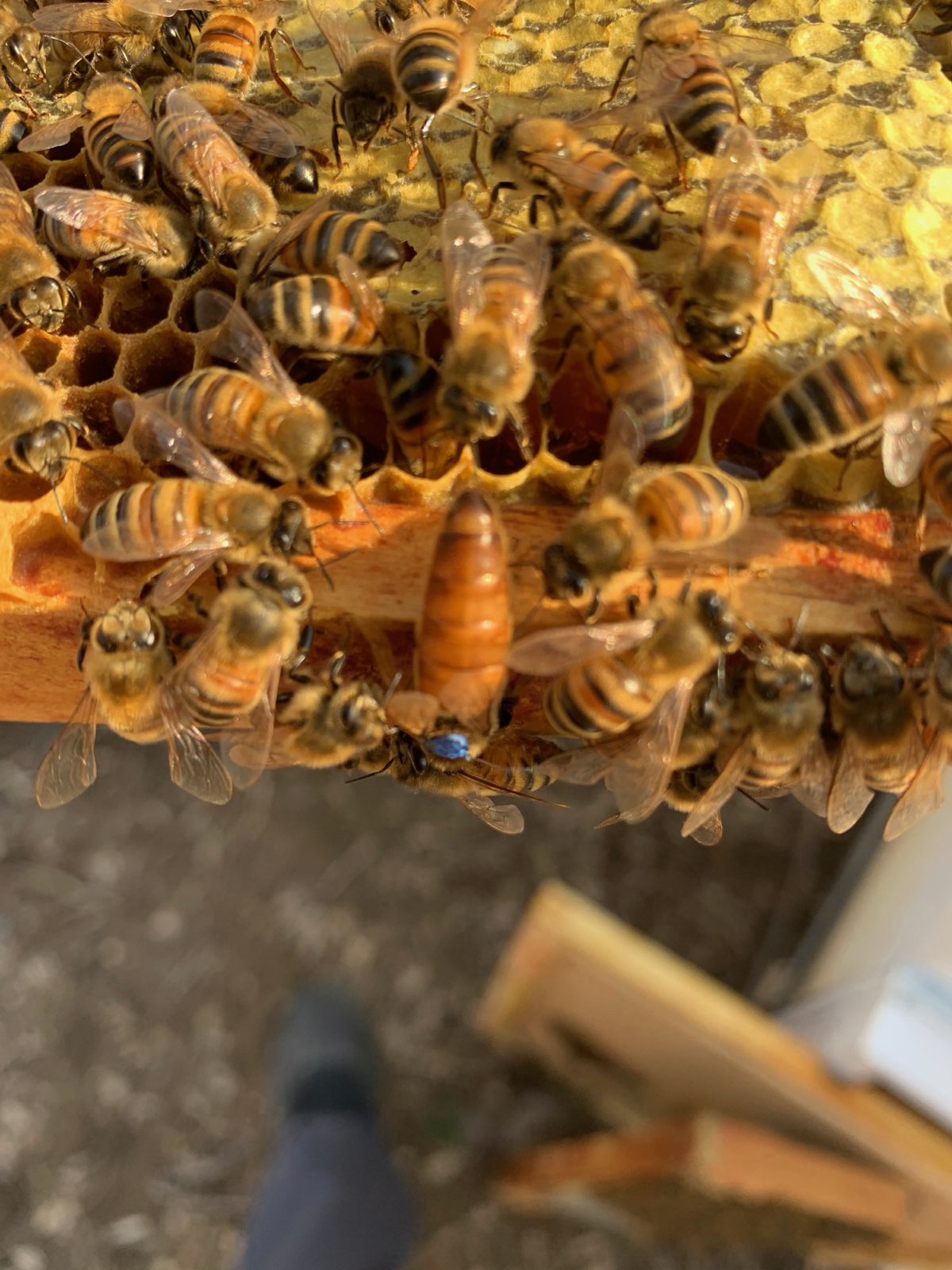
There's normally exactly one queen per colony, and she has one job: lay eggs. In peak season she can lay well over a thousand a day — more than her own body weight daily. She's longer than the other bees, with a smooth, tapered abdomen, and the workers tend to her constantly, feeding and grooming her.
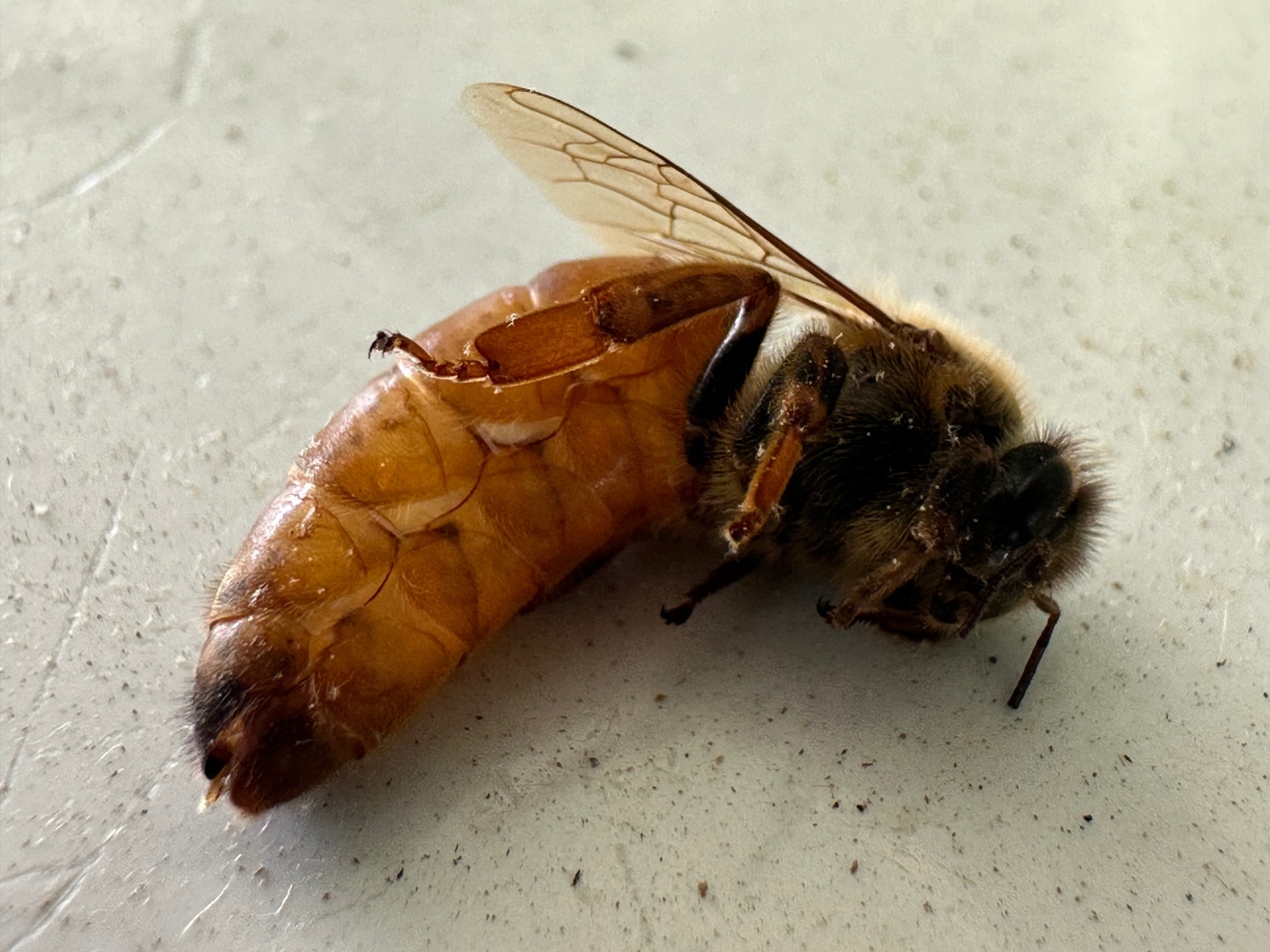
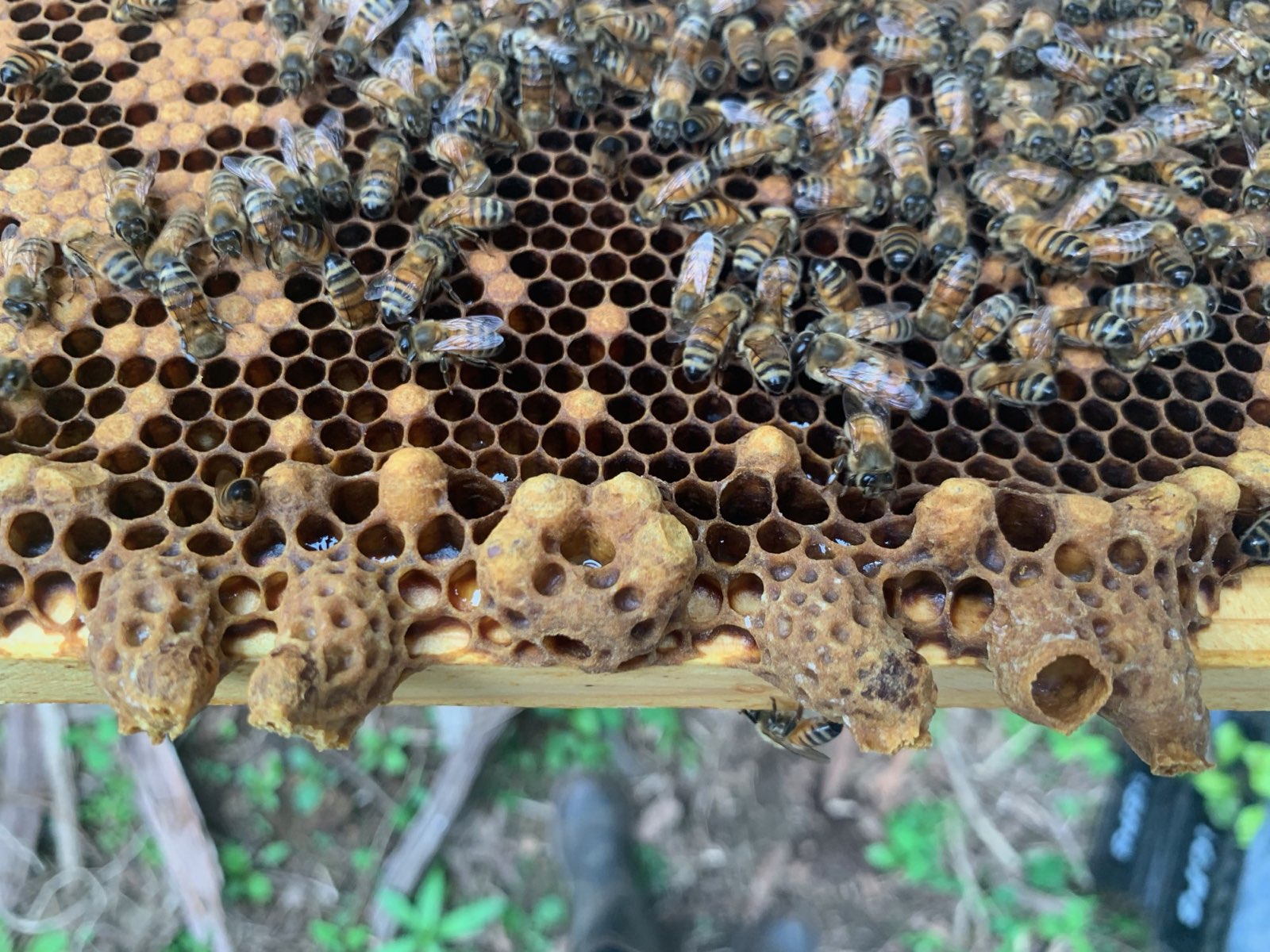
She's also the colony's chemical center. The queen gives off pheromones that tell the whole hive she's alive and well and keep everyone working together. When those pheromones fade — because she's failing or gone — the colony knows within hours and starts raising a new queen. A queen can live several years, far longer than any other bee in the hive.
The workers
Nearly every bee you see is a worker — a female that doesn't reproduce. Workers do essentially everything except lay eggs and mate, and remarkably, their job changes as they age. A worker's career runs roughly like this:
- Days 1–3: cleaning cells and keeping the brood warm.
- Days ~3–12: nurse bee — feeding the developing larvae.
- Days ~12–20: house work — building comb, storing honey and pollen, and standing guard at the entrance.
- Day ~20 onward: forager — leaving the hive to collect nectar, pollen, water, and propolis until she wears out.
In the busy summer, a worker's whole life is only about six weeks — she literally works herself out. The winter bees live far longer (months), because their job is to cluster and keep the colony alive until spring. Workers are the ones that sting, and because a worker's stinger is barbed, she can only use it once.
The drones
Drones are the male bees — bigger, rounder, with huge eyes and a loud, blundering flight. A colony keeps a few hundred of them in the warm months, and they have exactly one purpose: to mate with a young queen from another colony. Drones don't forage, don't build, don't clean, and — this surprises people — they can't sting at all. They have no stinger.
When fall comes and the mating season ends, the colony stops feeding drones and pushes them out of the hive to conserve resources for winter. It sounds harsh, but it's how the colony survives the cold months.
From egg to bee
Every bee starts the same way — the queen lays an egg in a wax cell — and goes through the same stages: egg → larva → pupa → adult. What differs is how long it takes and what the larva is fed:
- Queen: about 16 days from egg to emergence. A queen larva is fed royal jelly the whole time — that special diet is what turns an ordinary female egg into a queen.
- Worker: about 21 days.
- Drone: about 24 days.
The remarkable part: a queen and a worker start from identical eggs. The only difference is diet. Any young female larva could have become a queen if the colony had fed her royal jelly — which is exactly how a hive raises an emergency replacement when it loses its queen.
Why it all works
No single bee is in charge — not even the queen, who's really more the colony's egg-layer and chemical anchor than its boss. The hive runs on tens of thousands of individuals each doing the next job in front of them, guided by pheromones and instinct. That's what people mean when they call a colony a "superorganism." It's also why beekeeping is so absorbing: you're never managing one bee, you're reading the whole colony.
Curious how this all fits into a working operation? Take a look at what's inside a nucleus colony or how we produce PA-bred queens.
Want to see a hive up close?
We offer beekeeping mentorship and hands-on experiences here in Central PA.
Apiary services & mentorship