There's a ball of bees hanging in your tree
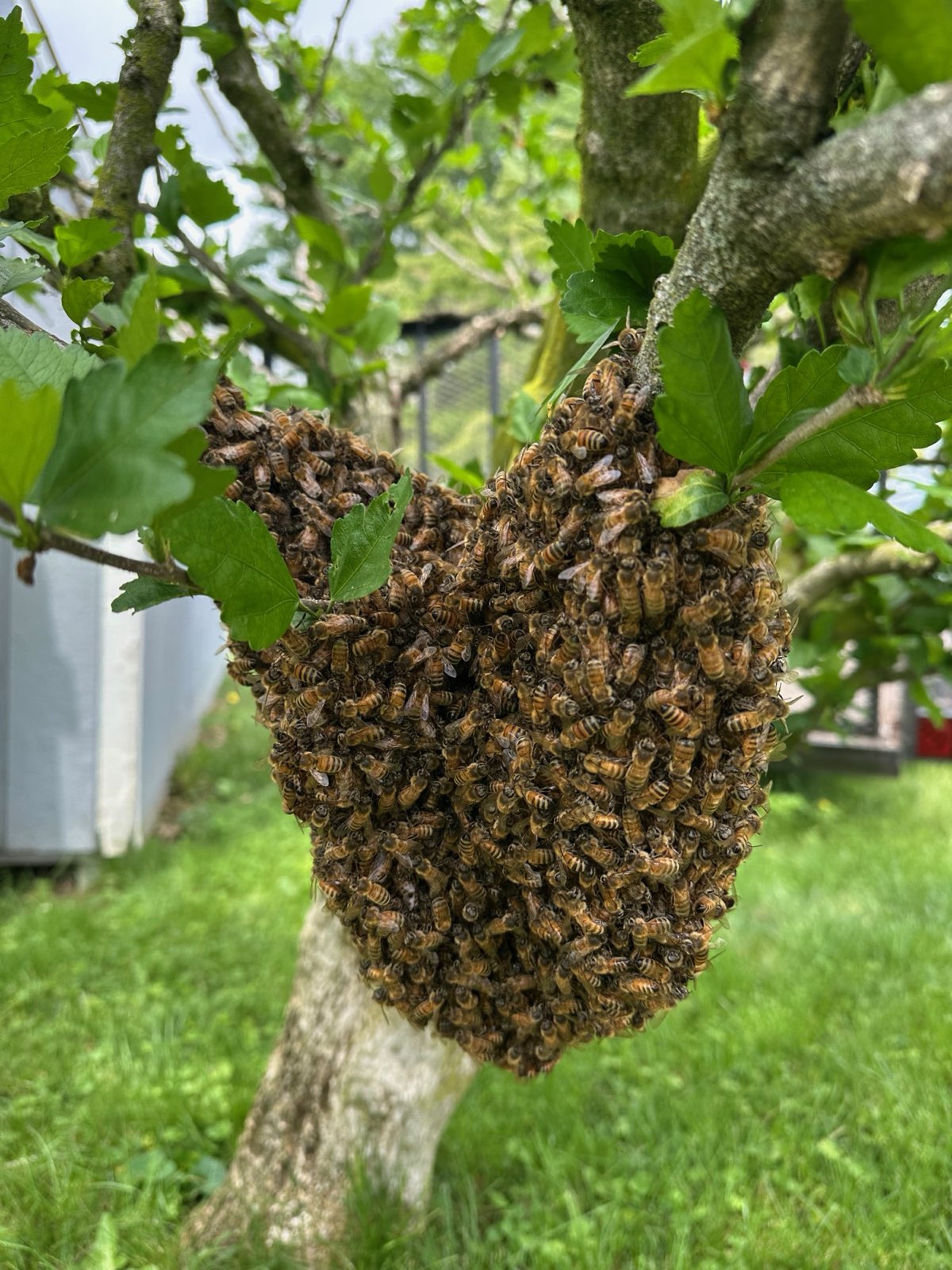
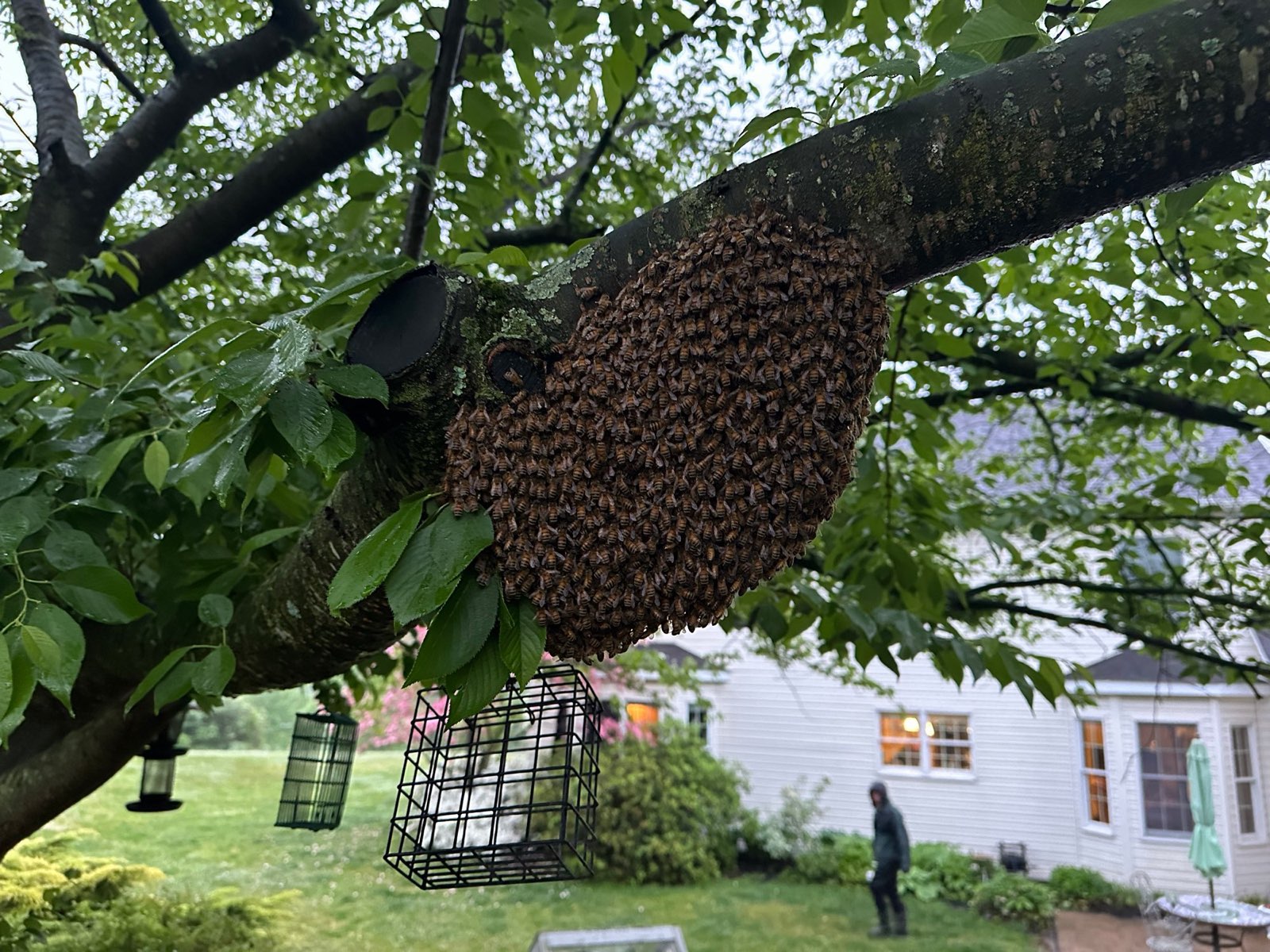
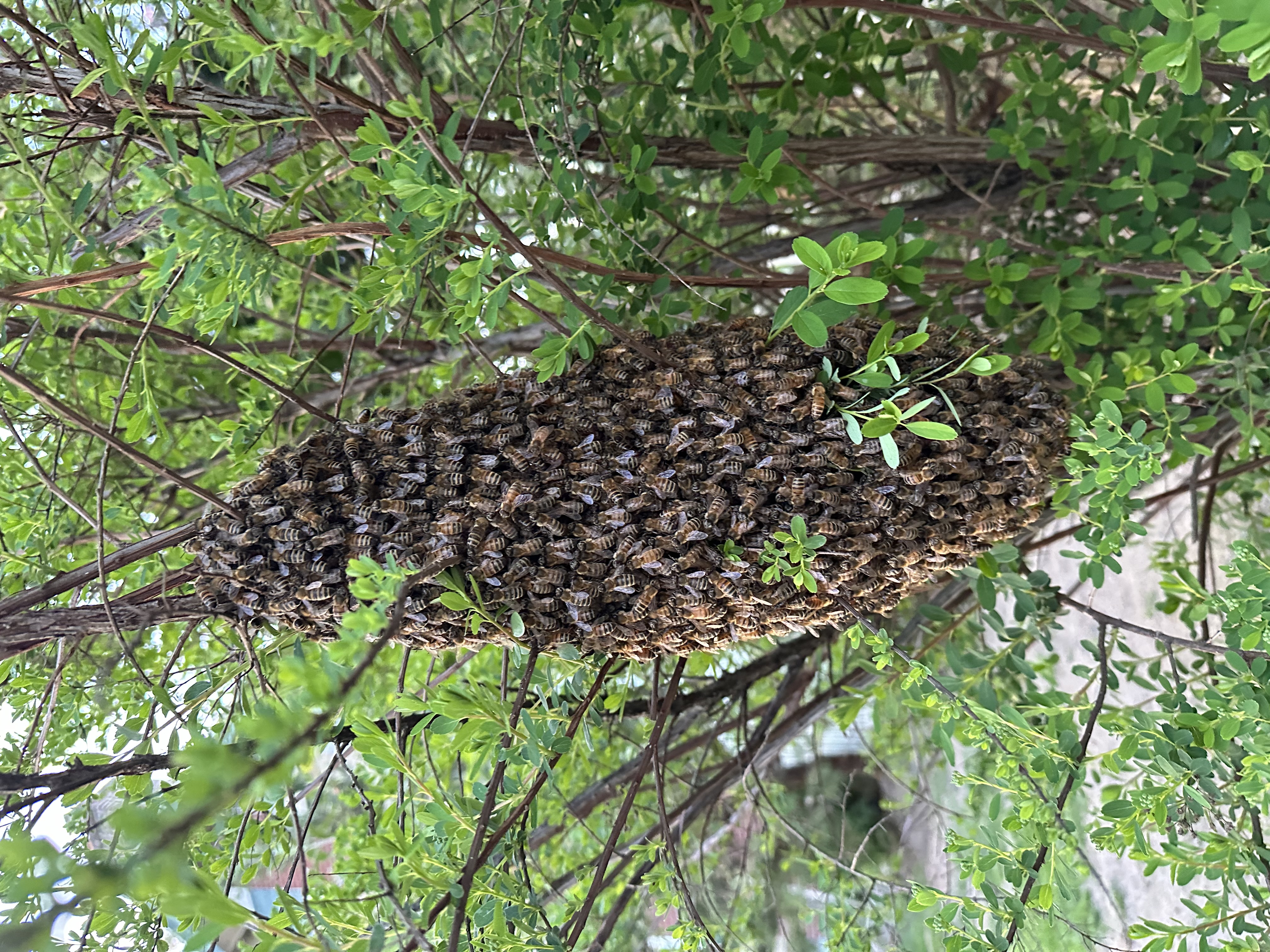
There is a ball of bees the size of a football hanging in your tree and it looks like the end of the world. It isn't. This is a swarm — bees in transit, resting with their queen while scouts look for a permanent home — and with no honey or brood to defend they are about as gentle as honey bees ever get. We'll come get them free. The only catch is time: they'll be gone in hours or days, and their next address may well be somebody's wall.
Is it free? Only if it's a swarm.
A swarm
A ball of bees hanging out in the open, on a branch, fence, or car. No nest, no comb. It shows up all at once and leaves on its own in 1–3 days. Almost always April through July.
Swarm collection →Honey bees living in your house
Bees going in and out of one hole in a wall, soffit, or chimney, day after day. That's a colony that has moved in and built comb and honey inside. It has to be cut out, so it's a removal job. The bees still leave alive.
Live bee removal →Yellow jackets, hornets & wasps
Shiny, fast, and after your food and drinks. Nests in the ground, in a wall, or in a grey paper ball. Worst from August through October. That's pest control, done by our sister company Lawns Plants & Pests.
Yellow jacket removal →Seeing bees go in and out of a hole in late summer or fall? That's almost never a swarm, and usually yellow jackets. Text a photo to 717-379-3248 and we'll tell you which one you have.
Why they're hanging there
When a strong colony outgrows its home in spring, it splits: the old queen leaves with roughly half the bees to found a new colony. That traveling half is the swarm. They cluster somewhere convenient — a branch, a shrub, a swing set — while scout bees fly out searching for a permanent cavity. The cluster is a waiting room, not a nest.
And here's the thing about swarming bees: they have nothing to defend. No comb, no brood, no honey stores — and they gorged on honey before leaving home, which makes them about as docile as honey bees ever get. Swarms look terrifying and sting almost nobody. We handle many of them without so much as a veil. (Still — admire from a respectful distance.)
Why you should call right away
A swarm stays put anywhere from an hour to a couple of days — however long it takes the scouts to agree on a new home. When they agree, the whole cluster lifts off and moves in. And their favorite "new homes" are the ones on this website's other pages: soffits, wall voids, and chimneys — yours or your neighbor's.
A swarm on a branch is a free 30-minute collection. The same bees in a wall three days later are a structural removal. Calling fast is the difference, so call while they're still hanging: 717-379-3248. Texting a photo with your location gets the fastest response — during swarm season (late April through June) we prioritize same-day pickup on active swarms.
What collection looks like
- You call or text a photo. We confirm it's honey bees (wasps don't cluster like this — but see the ID guide) and ask how high and how long it's been there.
- We come with a box. The cluster gets shaken, brushed, or gently scooped into a hive box. Get the queen in the box and the rest march in on their own — it's genuinely satisfying to watch, and kids (from a distance) love it.
- We wait for stragglers, usually until dusk, then the box is closed and the colony rides to one of our Central PA apiaries to start its new life making honey.
- It costs you nothing. Swarms are collected free, however high they are — the bees are the payment.
Swarm FAQ
Will they attack my kids or dog?
Swarms are the gentlest configuration of honey bees — no home to defend. Keep kids and pets from poking the cluster, and everyone will be fine until we arrive.
What if I just leave them alone?
They'll leave on their own within hours or days — that's true. But they're not going far, and they're house-hunting. Free collection now beats a wall removal at your neighbor's in June. It also puts the bees in a managed apiary instead of a structure.
They're 40 feet up a tree. Can you still get them?
Depends on access — sometimes yes, sometimes it's smarter to wait and see if they resettle lower (they often do). Text a photo and we'll give you a straight answer. Either way, it's free.
They flew into a hole in my wall an hour ago. Now what?
You're in luck-adjacent territory: a colony that just moved in is the easiest structural removal there is — days matter here. See bees in walls and call today, not next month.
Swarm hanging in your yard right now?
Free swarm collection across Harrisburg, Hershey, Camp Hill, Mechanicsburg, Carlisle, and Central PA. Text a photo for the fastest response.
Call or Text 717-379-3248